Every other tool fakes HDR.
VESAI masters it, scene by scene.
VESAI analyses your whole video, then masters real HDR10 from SDR: skin and midtones stay natural, highlights grow to your peak, bright skies and lights are controlled shot by shot, and MaxCLL / MaxFALL are measured from the result. One click for enthusiasts. Scopes, curves and full control for professionals. Plus AI upscaling up to 12K and frame interpolation.
Watch real conversions from our YouTube channel
100K+ subscribers watch HDR-X for 4K/8K HDR trailers and head-to-head comparisons — all mastered with VESAI. Watch on an HDR screen for the full effect.
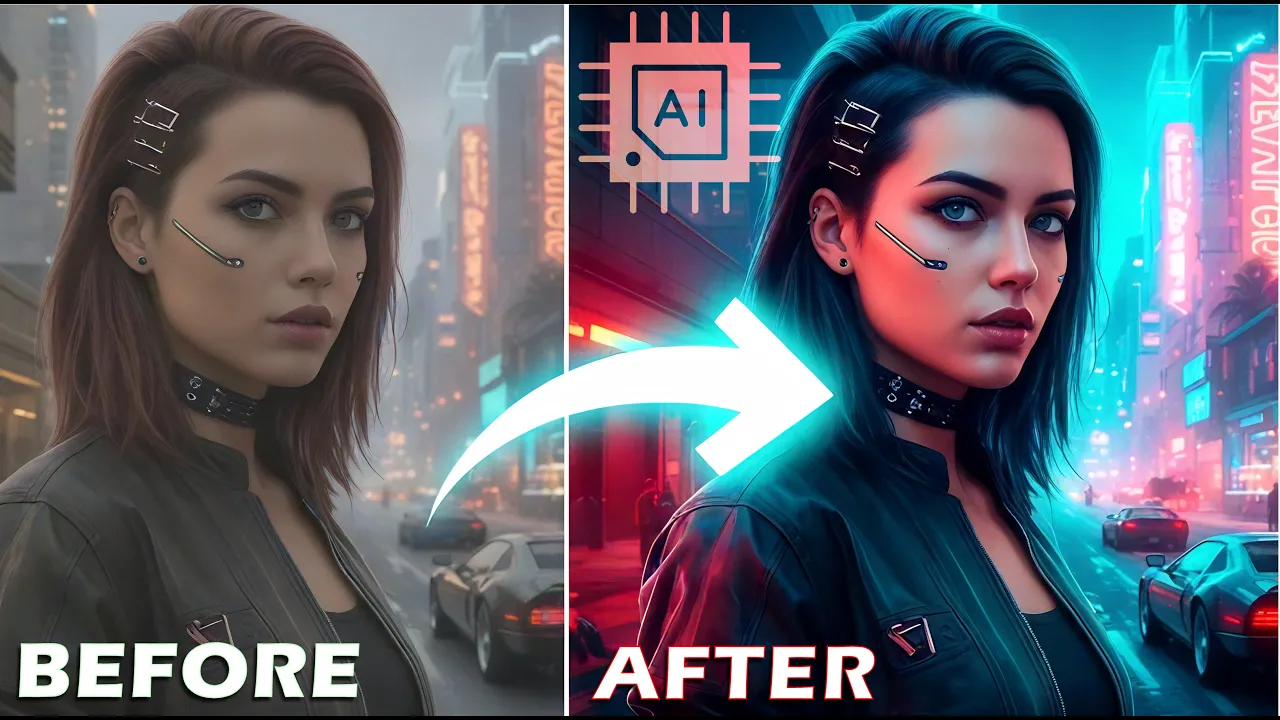 ▶
▶
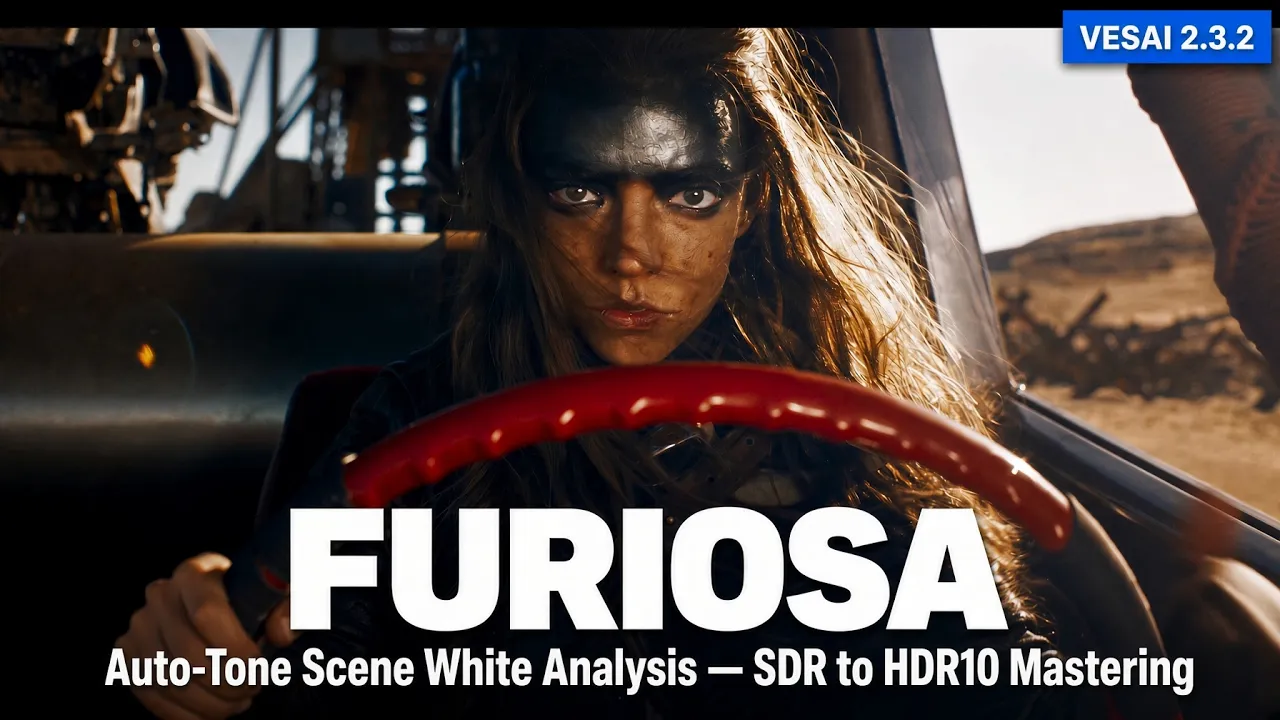 ▶
▶
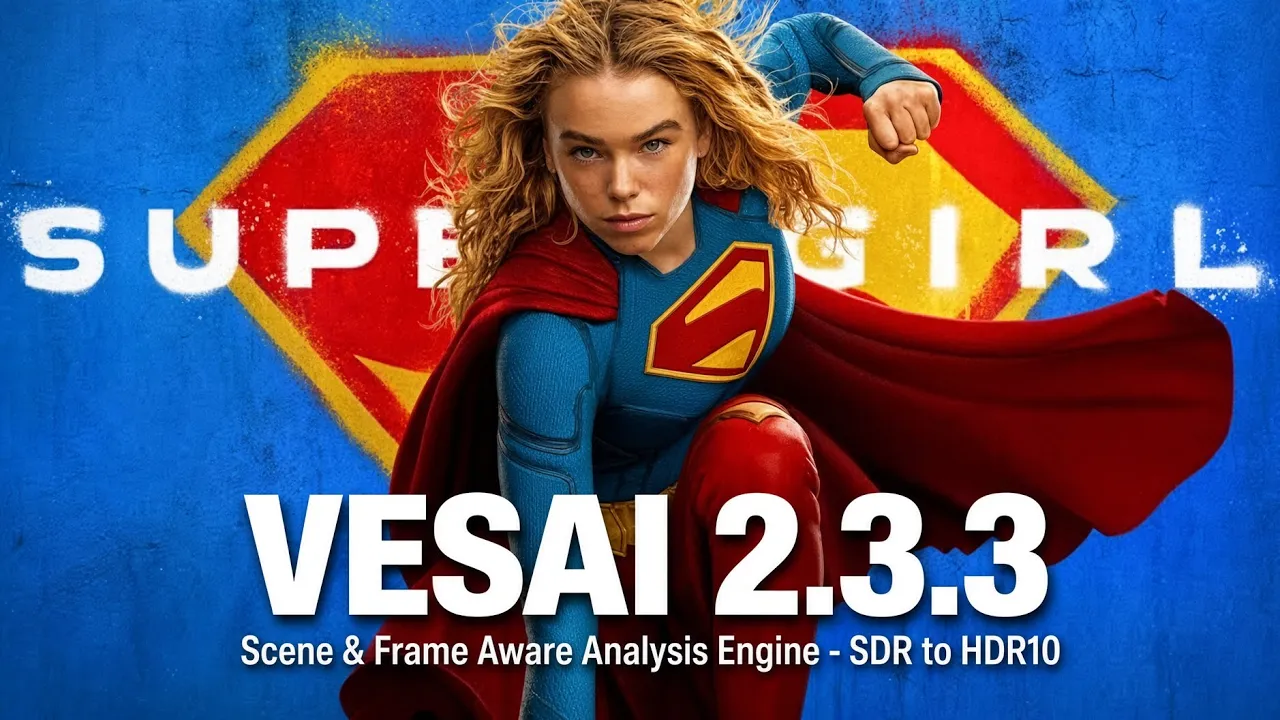 ▶
▶
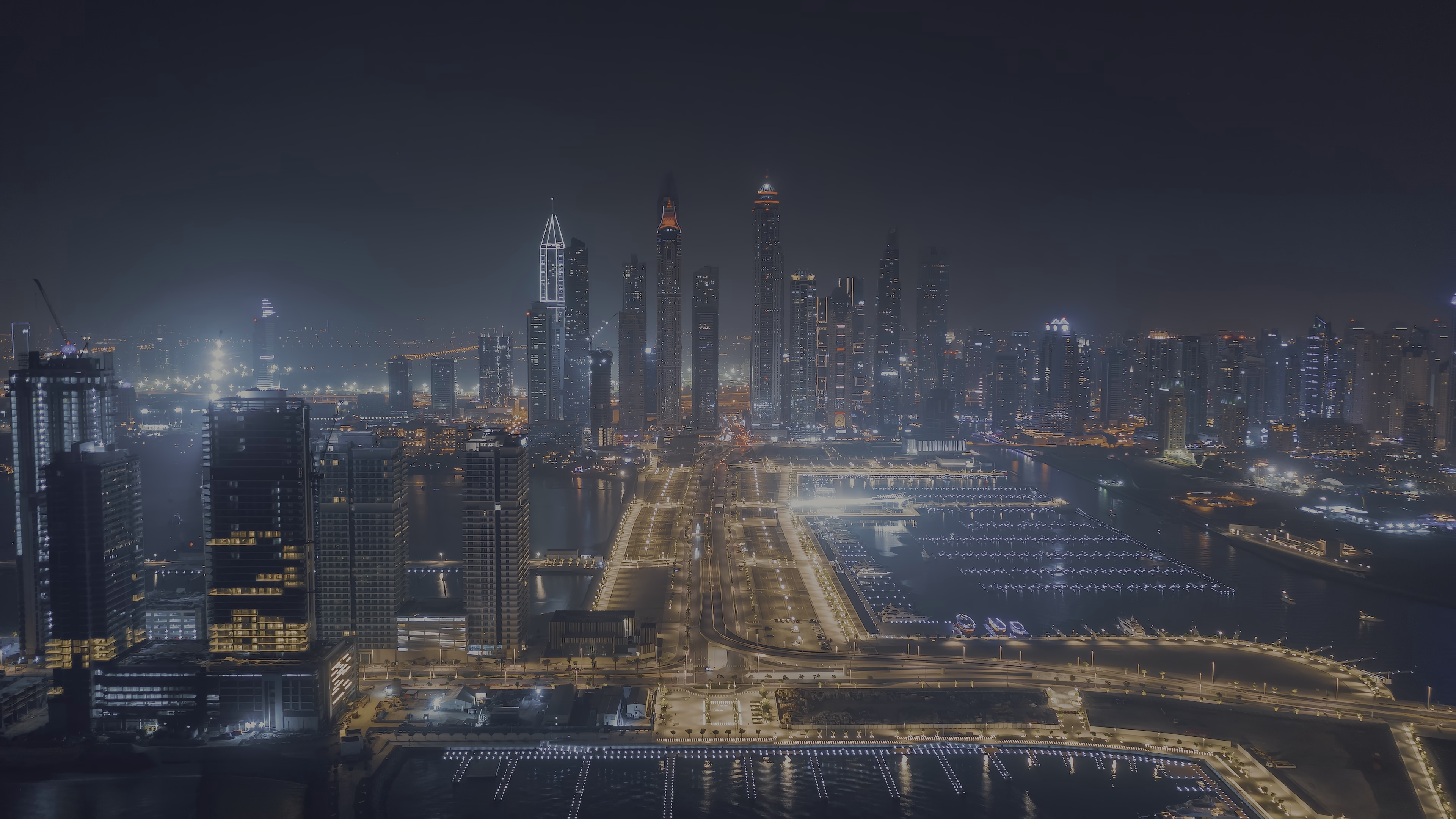
Drag the slider. That's real HDR.
Same frame, same display. The VESAI HDR10 master keeps skin and midtones true to the source and adds real highlight range: speculars, lamps and city lights rise toward the peak while large bright areas stay comfortable.
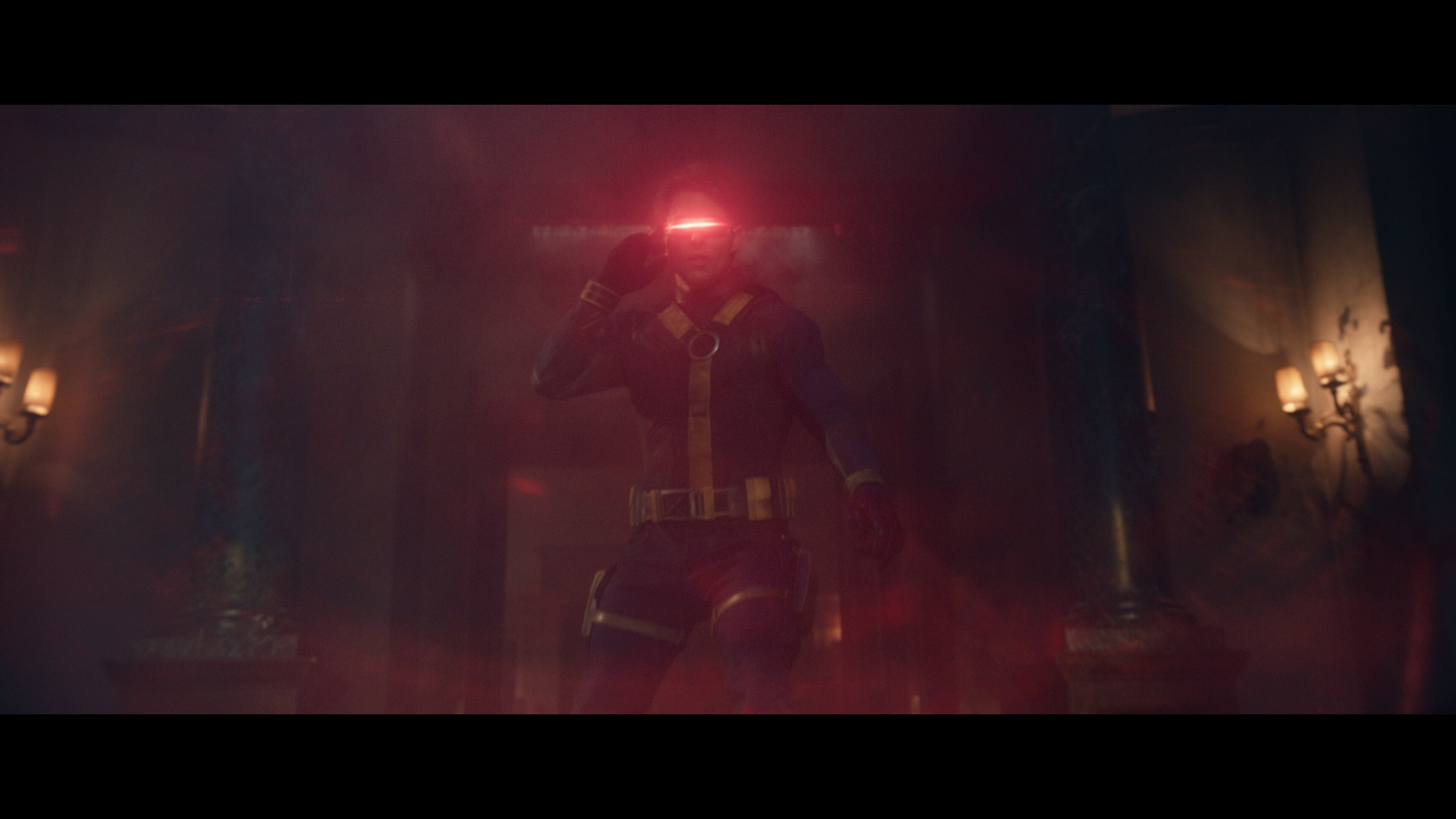
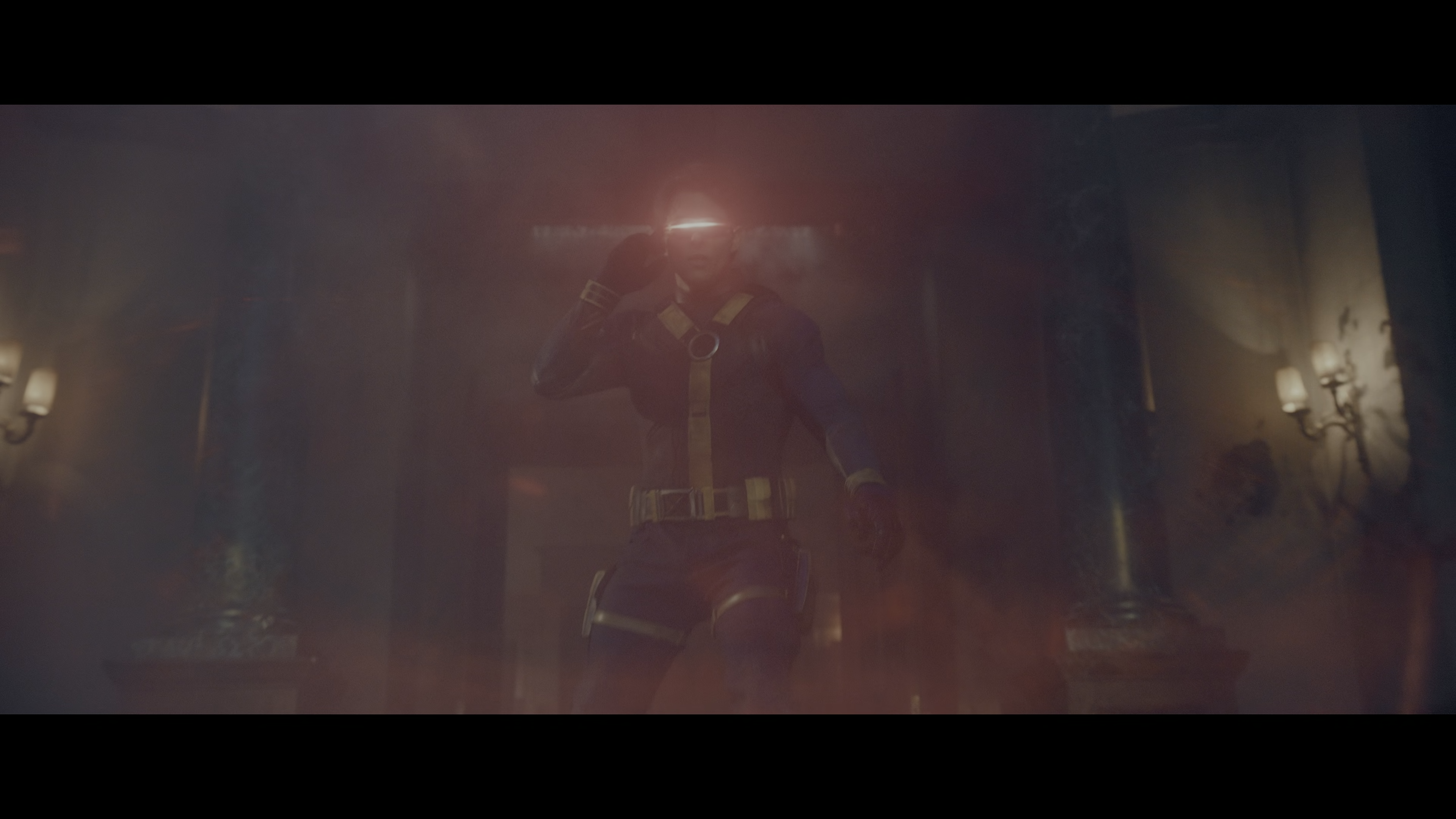 SDR SOURCE
VESAI HDR10
SDR SOURCE
VESAI HDR10
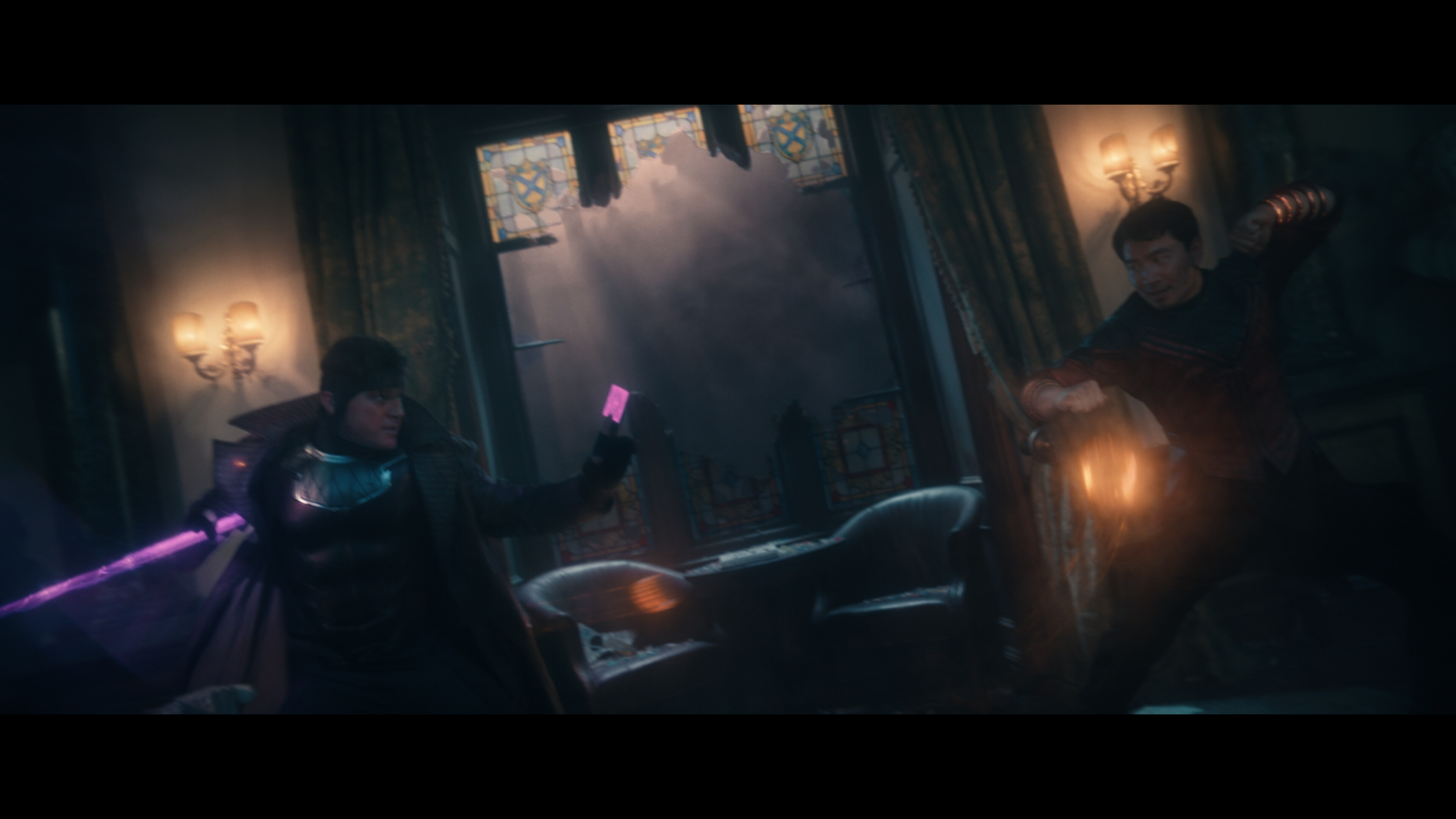
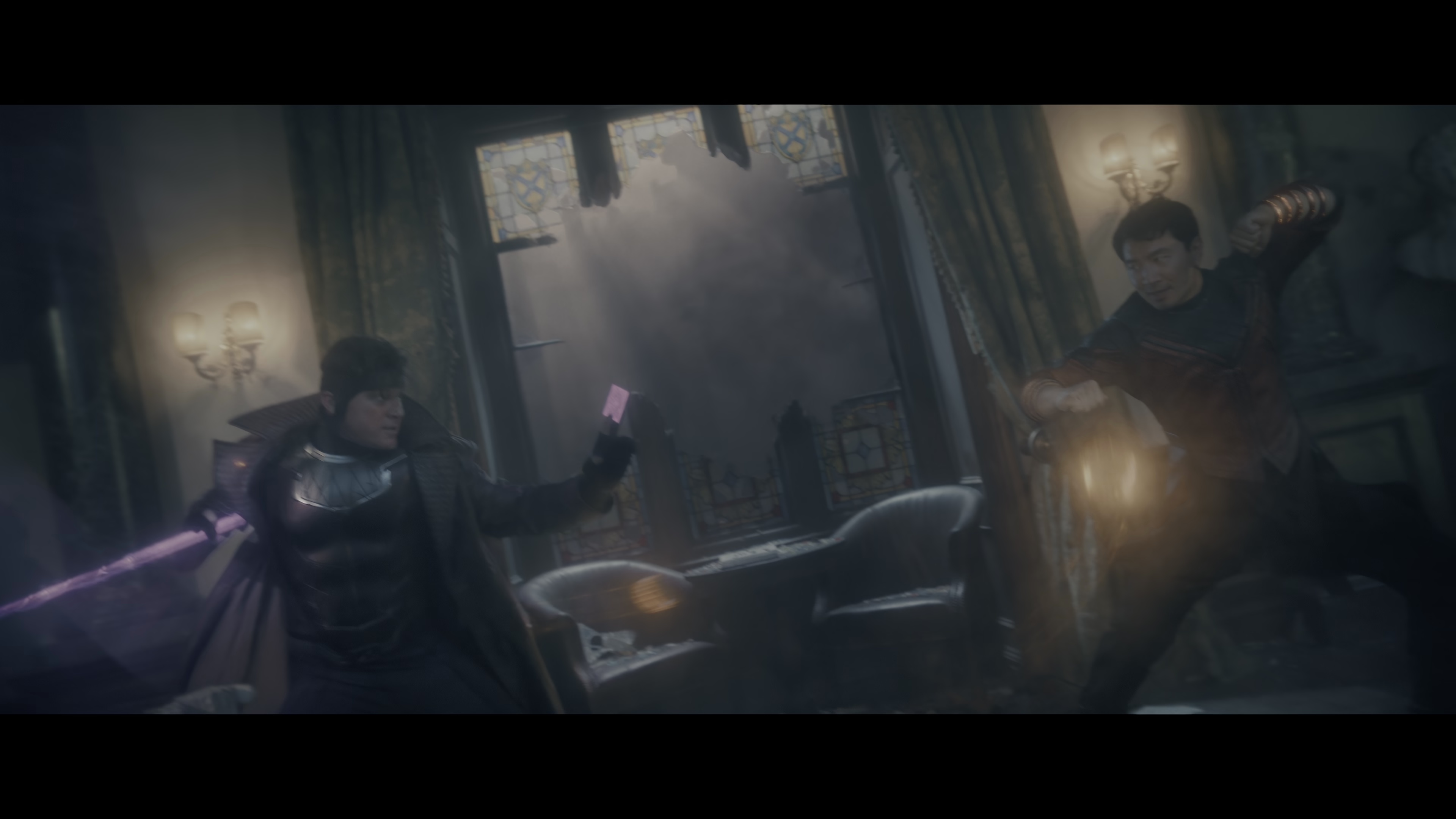 SDR SOURCE
VESAI HDR10
SDR SOURCE
VESAI HDR10
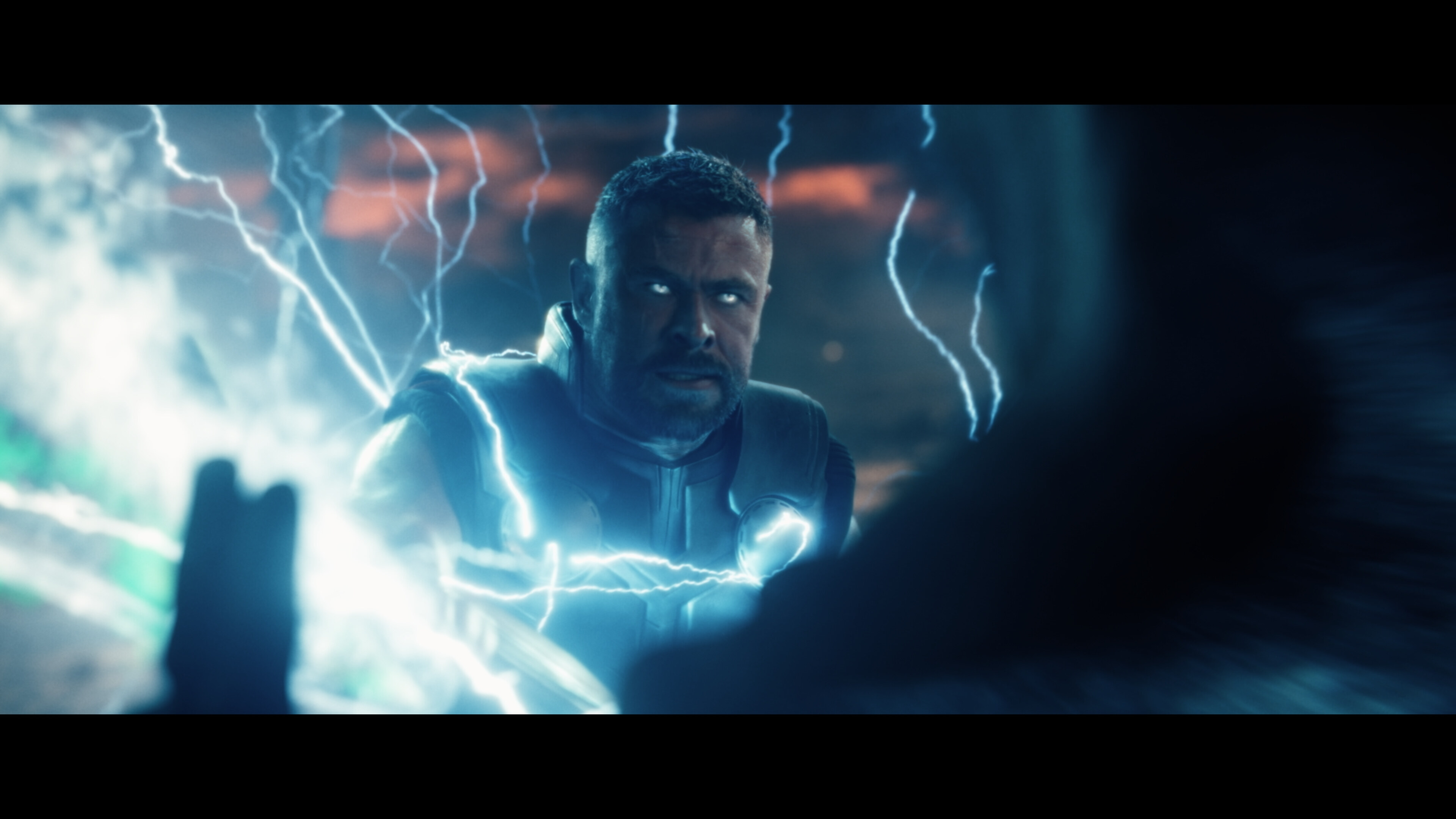
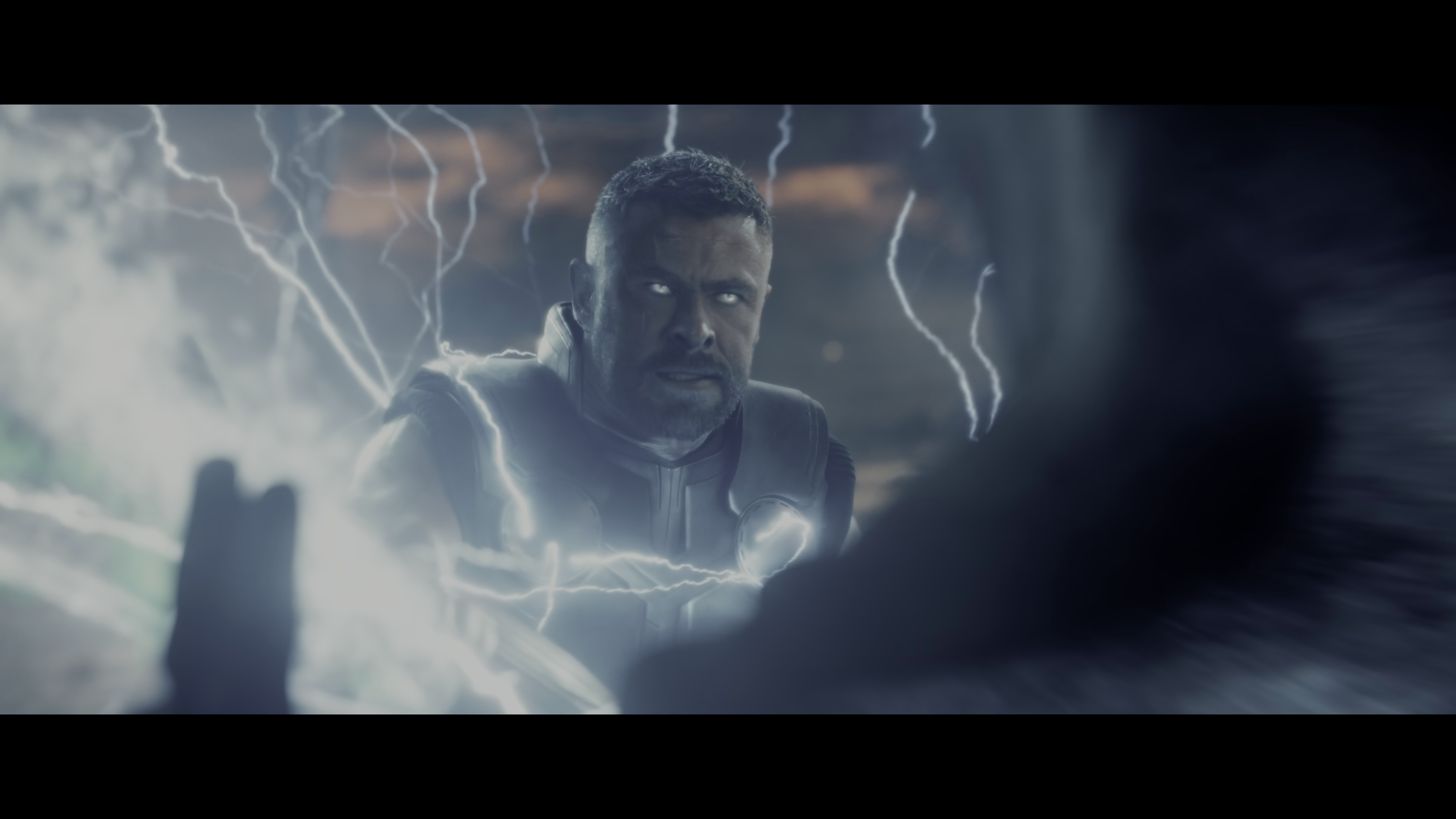 SDR SOURCE
VESAI HDR10
SDR SOURCE
VESAI HDR10
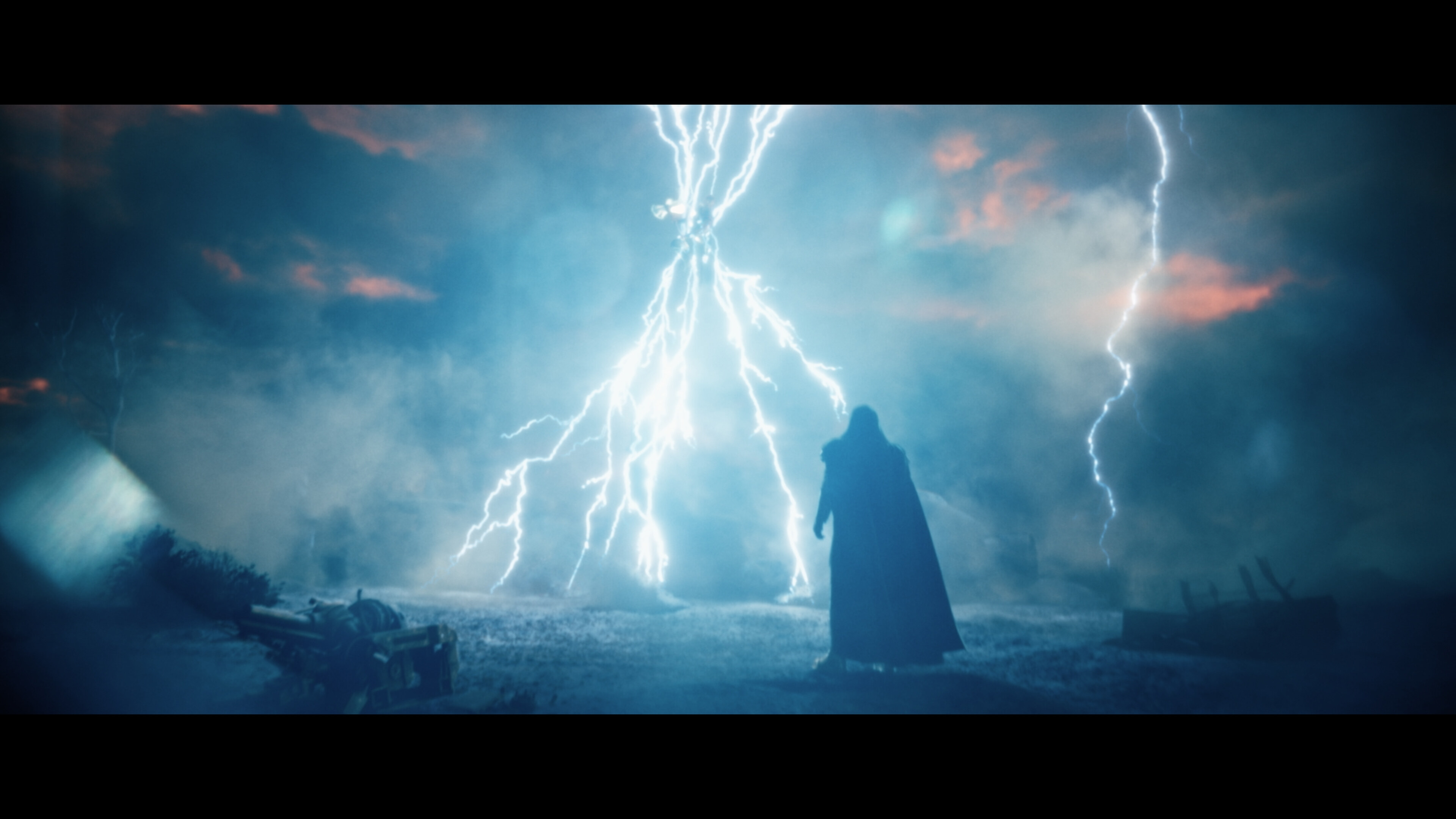
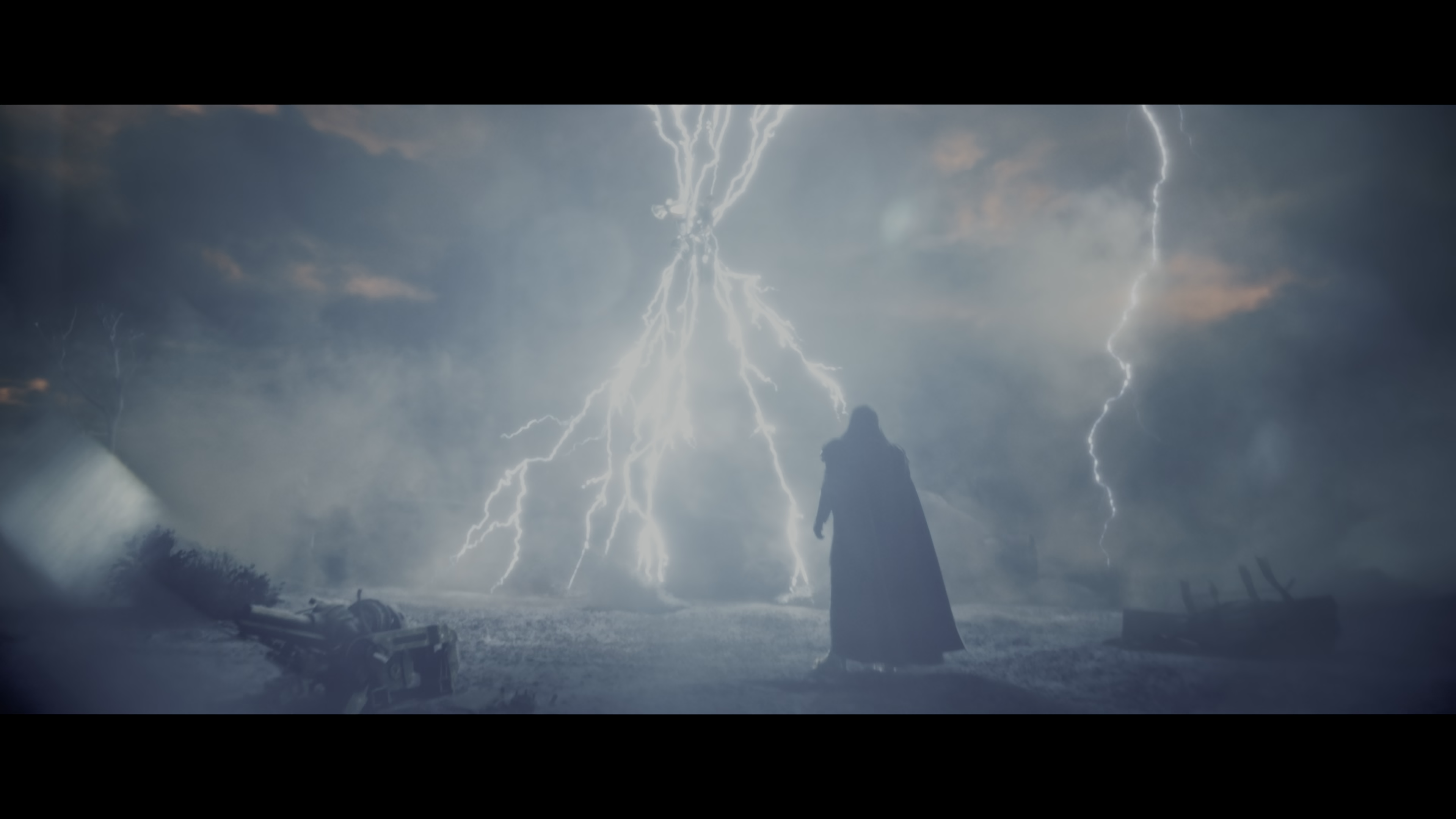 SDR SOURCE
VESAI HDR10
SDR SOURCE
VESAI HDR10
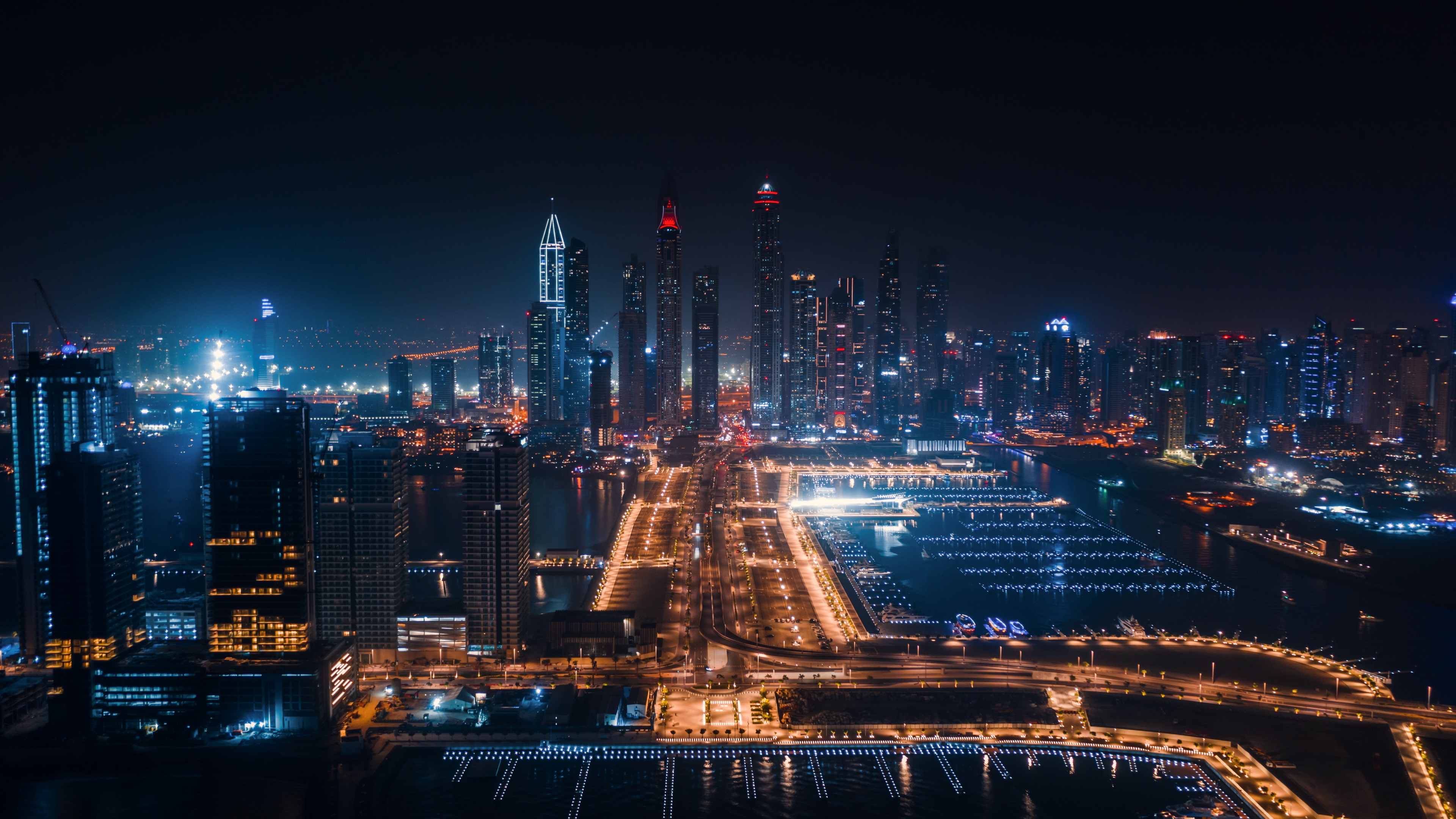
 SDR SOURCE
VESAI HDR10
SDR SOURCE
VESAI HDR10
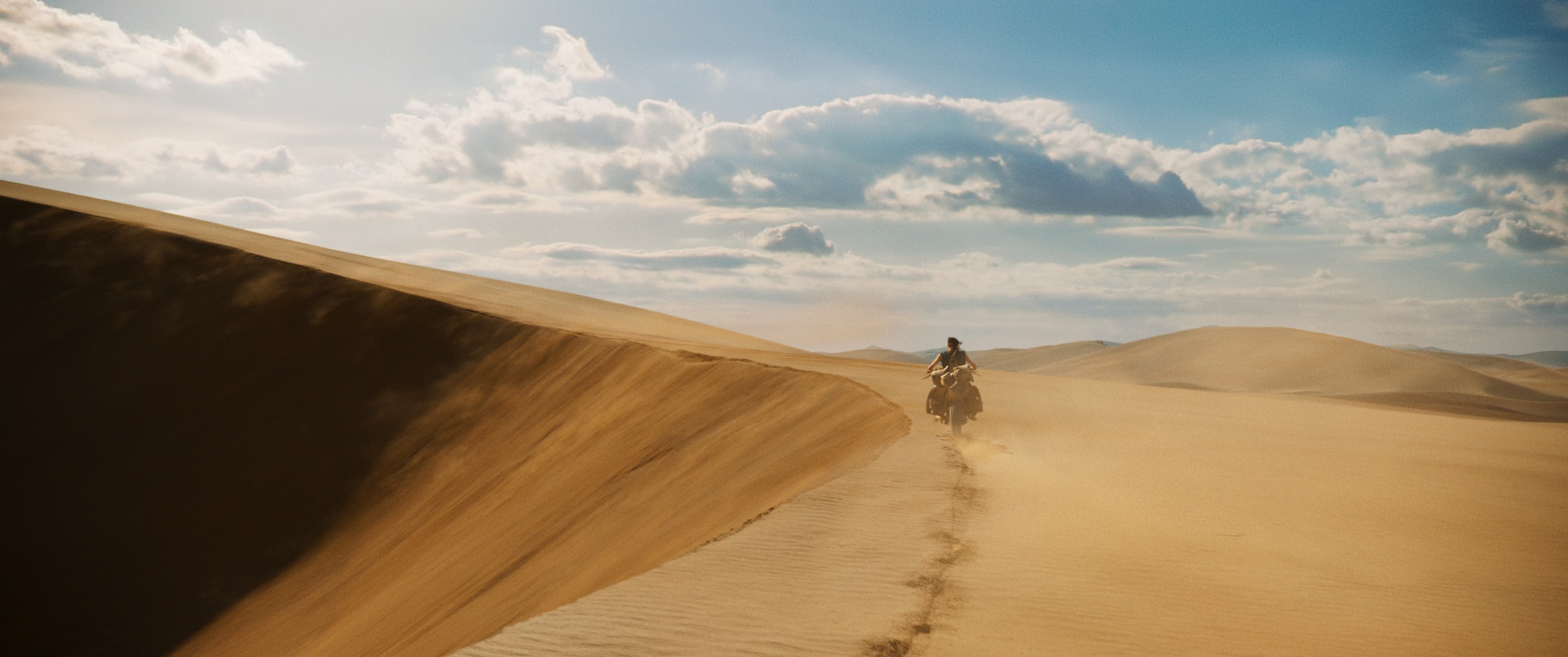
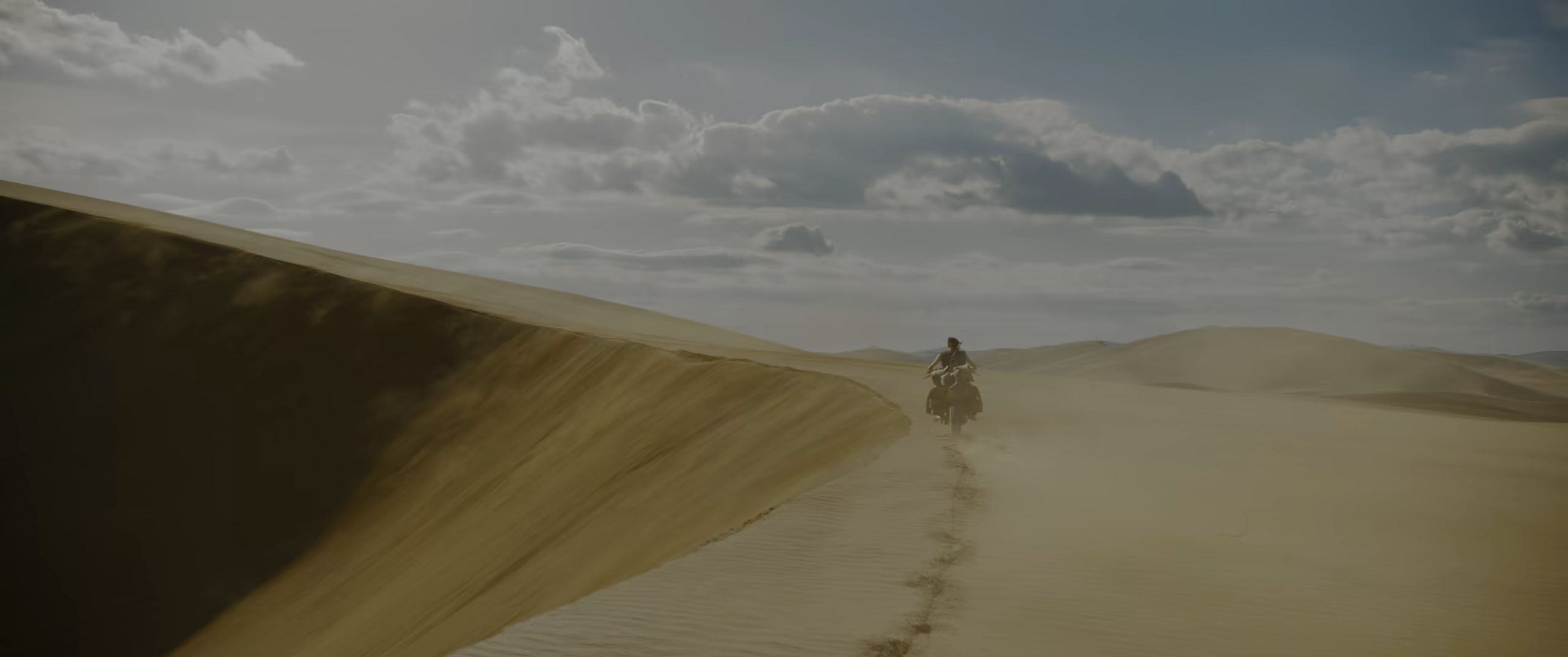
SDR original vs VESAI HDR10
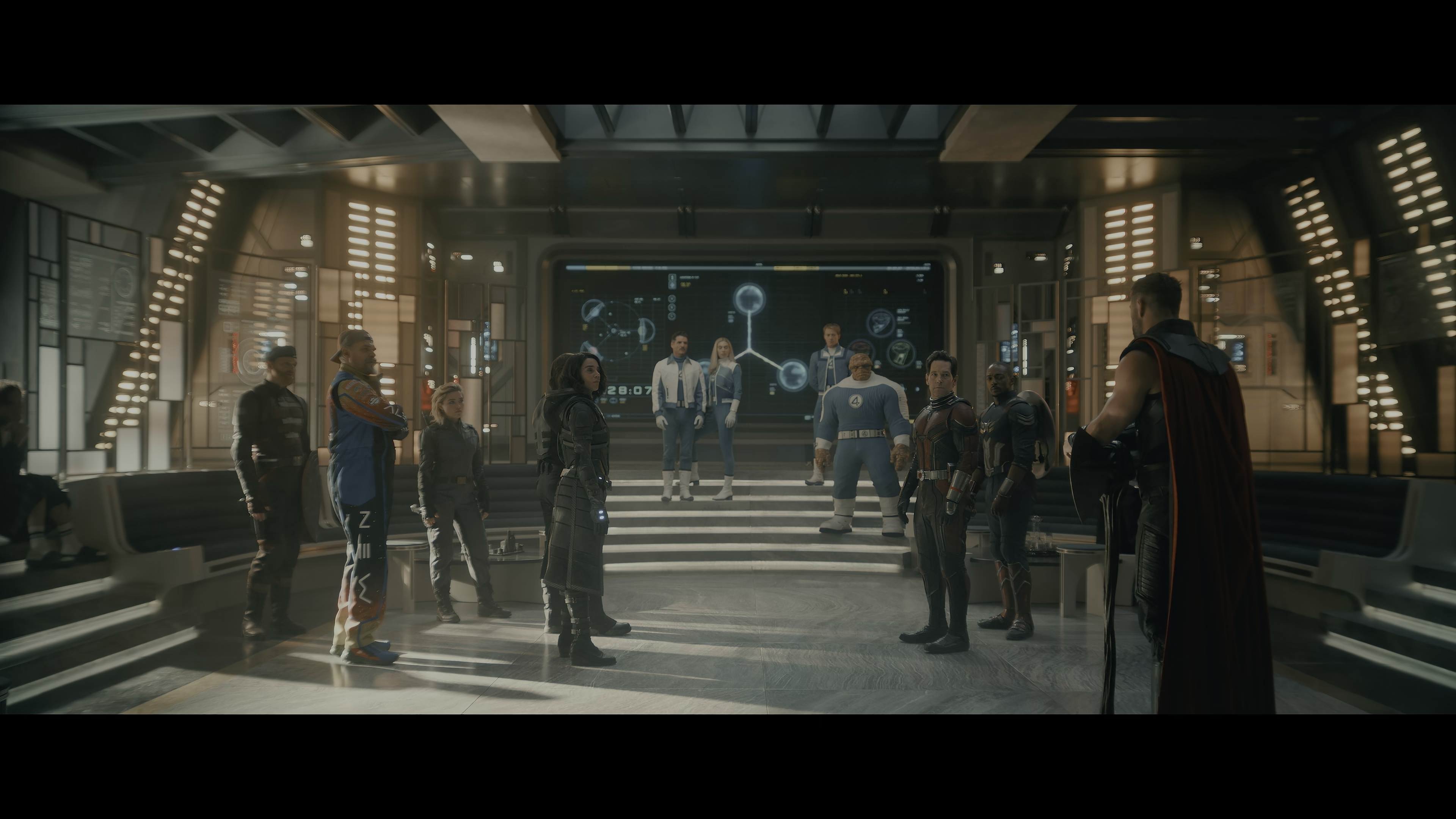
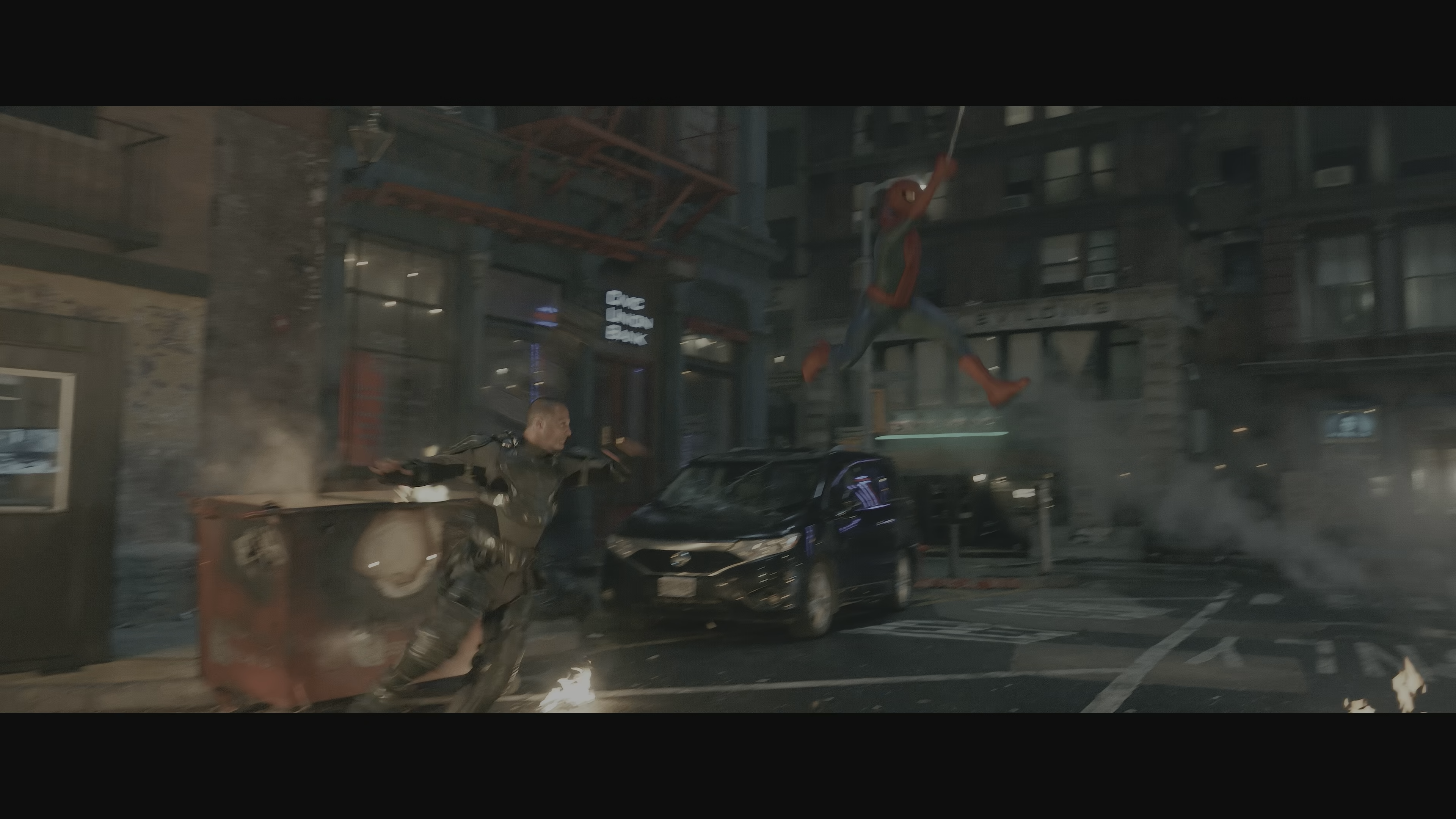
The right image is the real HDR10 master (10-bit, PQ, BT.2020), exported by VESAI as AVIF. On an HDR screen - Windows HDR on in Chrome or Edge, or a recent iPhone, iPad, Mac or Android phone - it shows in true HDR, with highlights far brighter than this page's white.
 SDR ORIGINAL
 VESAI HDR10 · REAL HDR
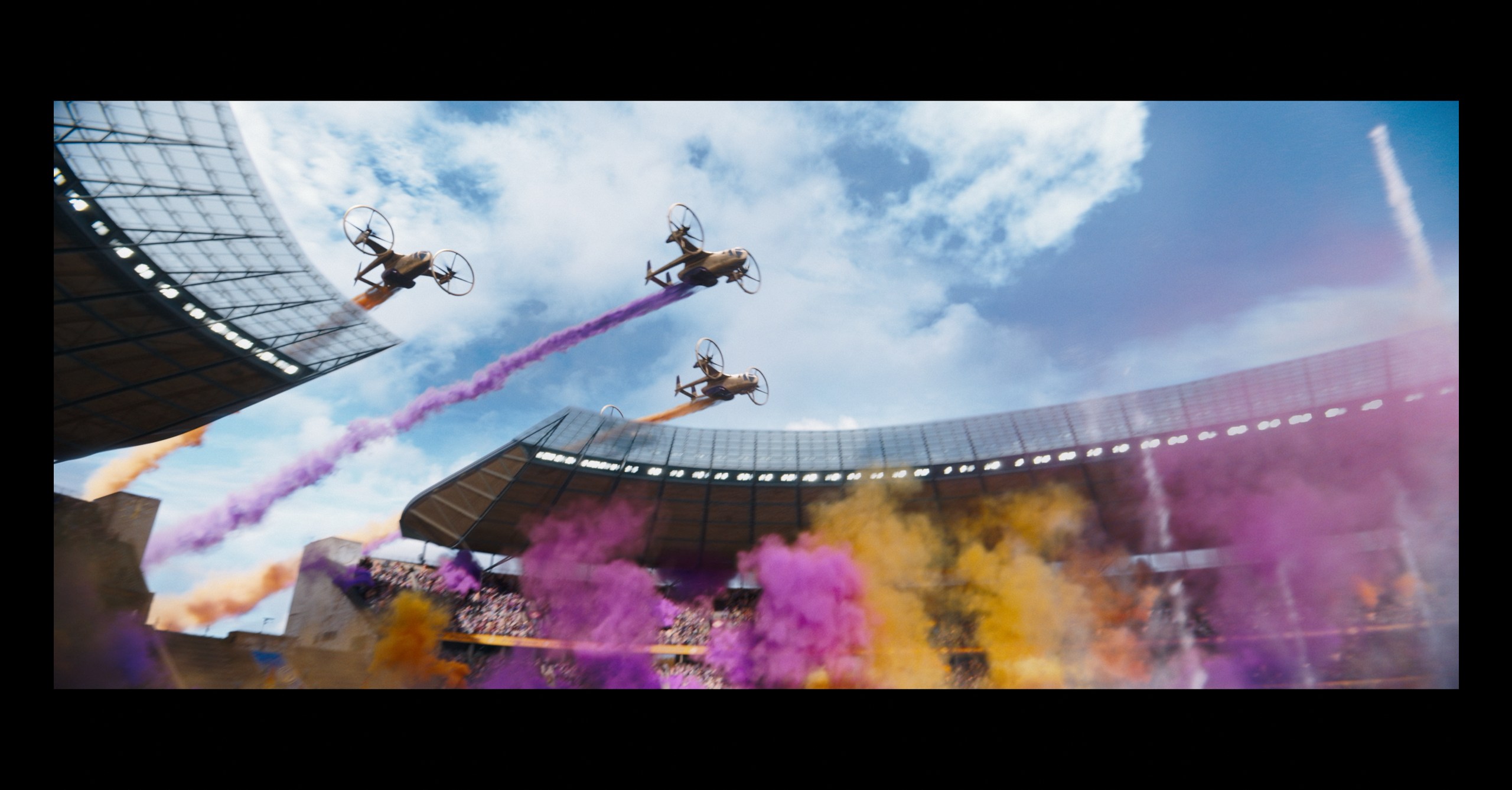
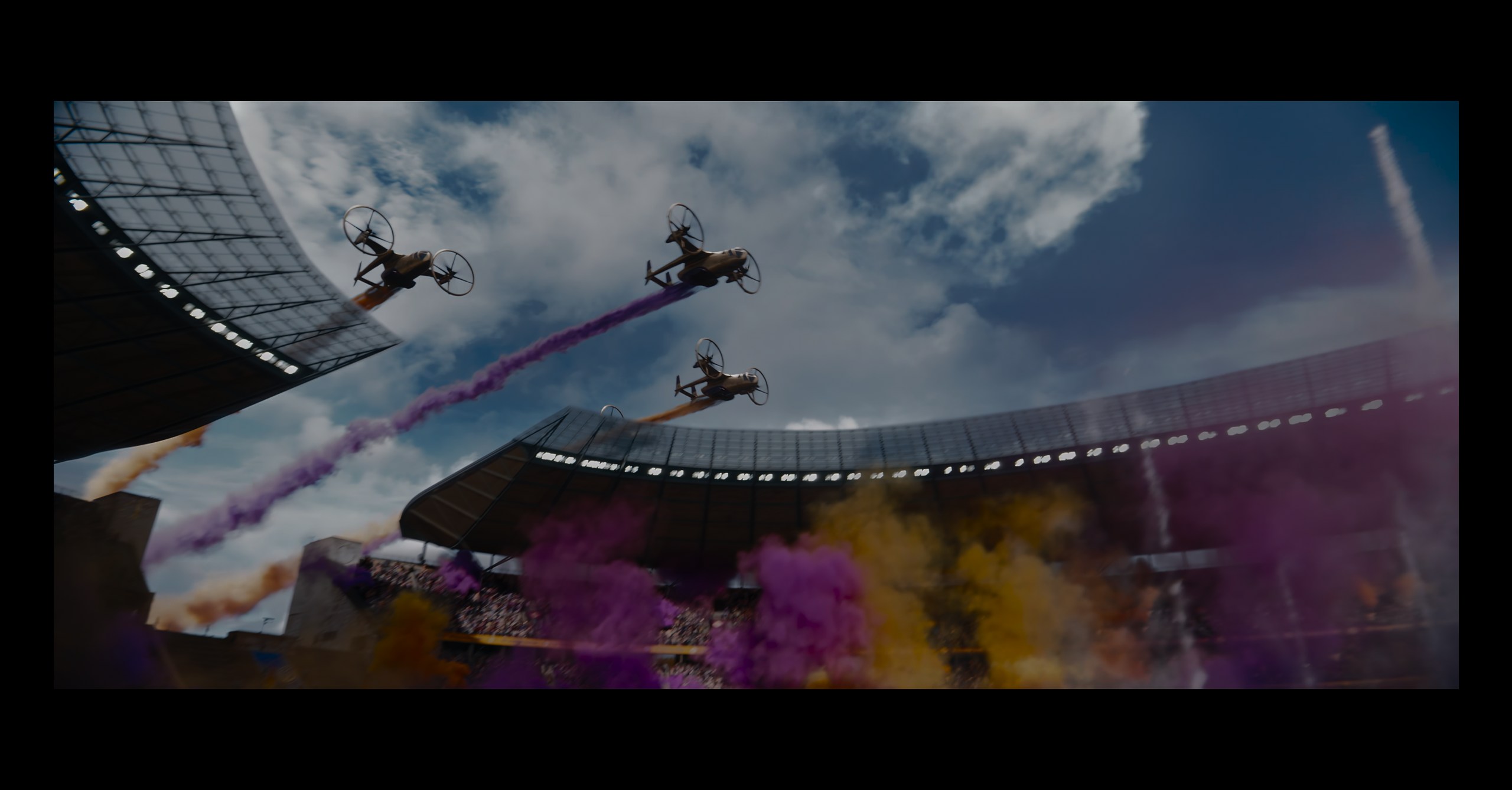
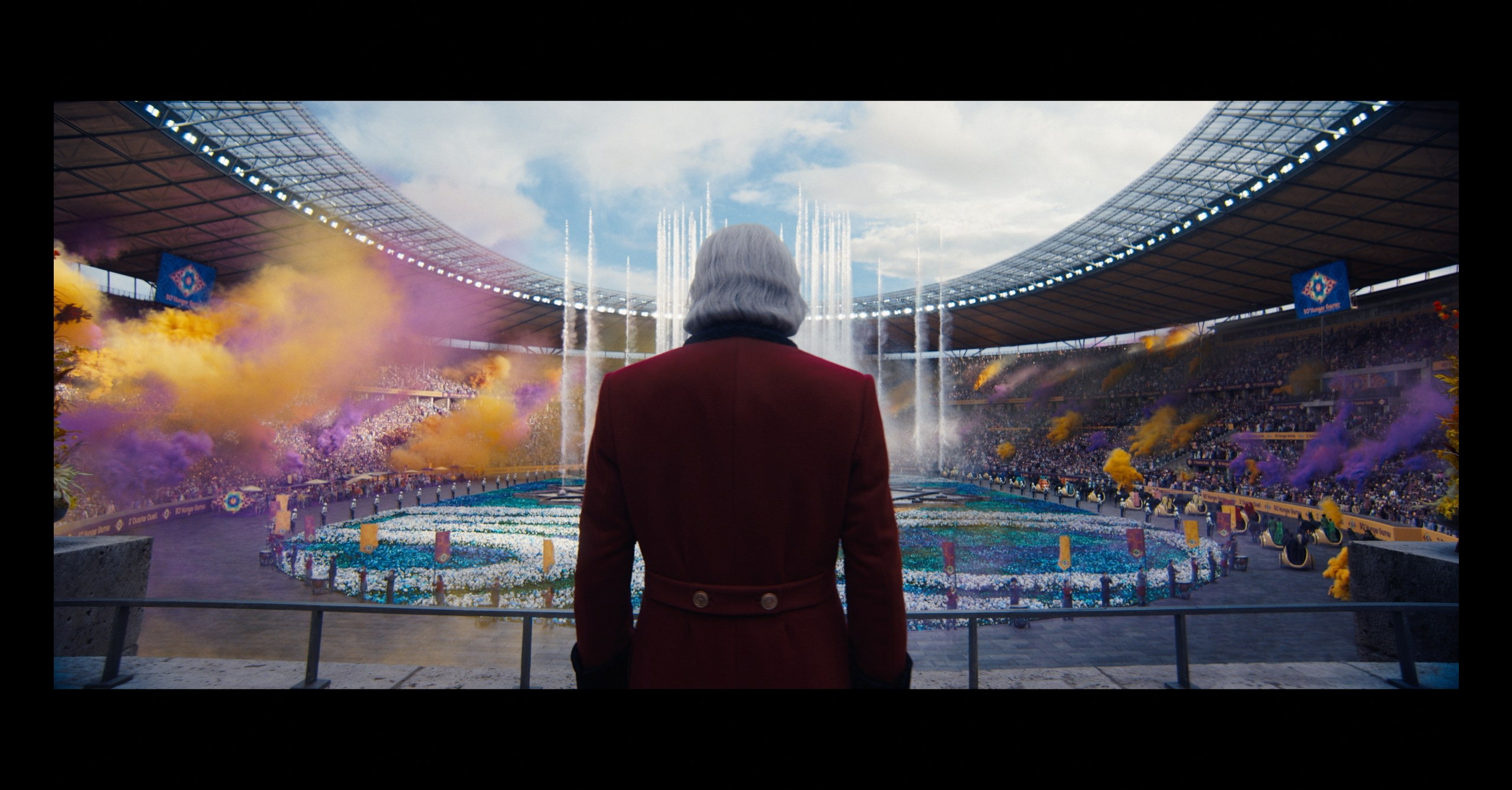
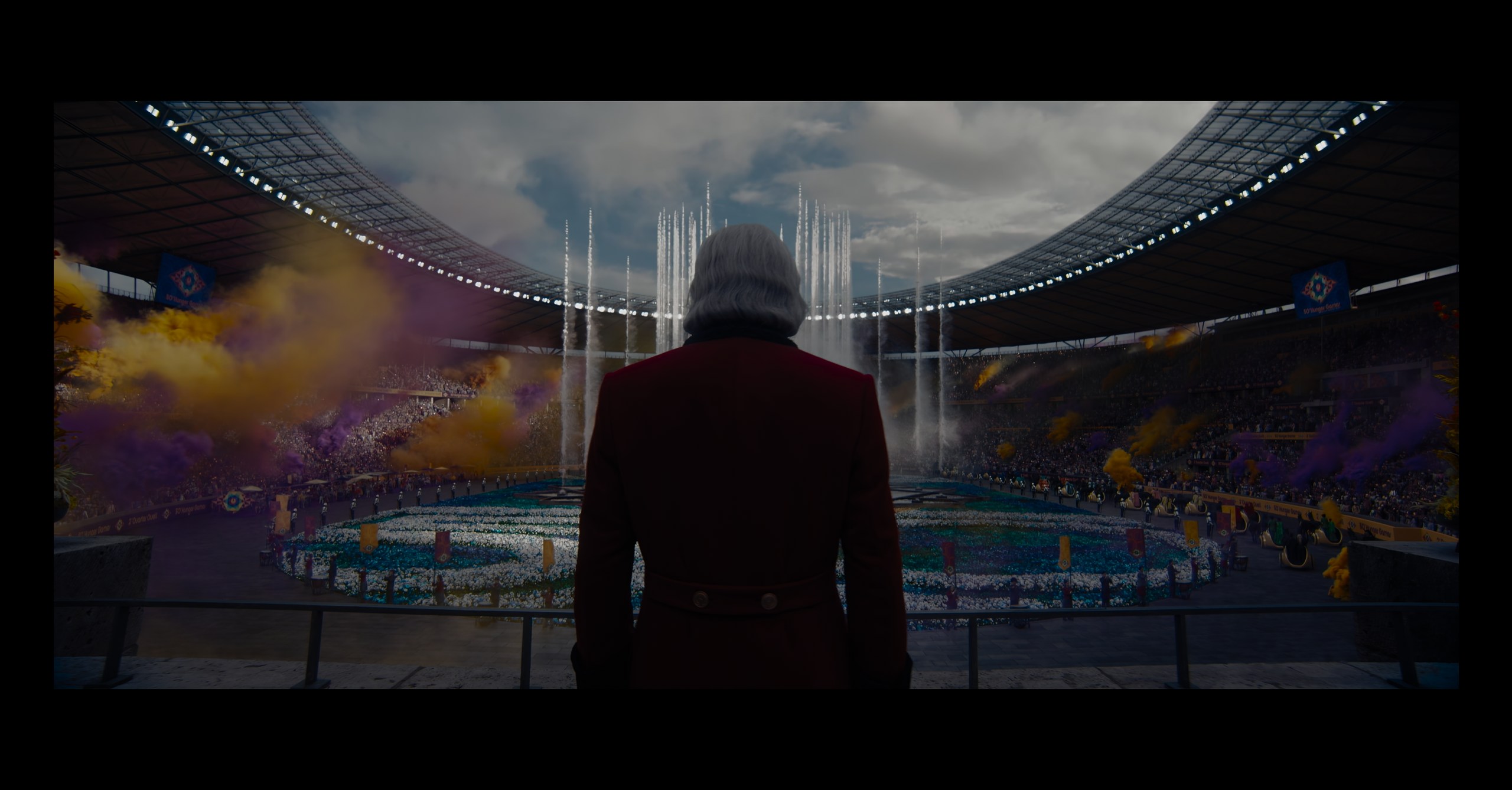
The same idea on an SDR screen, through madVR
These are not the HDR images themselves: they are SDR simulations. Left: the SDR source. Right: the VESAI HDR10 master tonemapped by madVR at a very high target (about 900 nits), so the new highlight detail, specular lights, reflections and wider colour become visible on a normal screen. On an HDR display the master is far brighter than this.
 SDR ORIGINAL
 VESAI HDR · madVR SIMULATION
 SDR ORIGINAL
 VESAI HDR · madVR SIMULATION
It watches the whole video before it touches a pixel
No fixed filter applied blindly to every frame. VESAI measures your video first, then builds the HDR master from what it found.
Speculars to the peak. Everything else stays comfortable.
Real HDR punch comes from small, very bright highlights. VESAI finds them on every frame and separates them from the large bright areas, pixel by pixel, automatically. In a grading suite, a colourist would do this by hand with a qualifier and a mask.
Three controls: Specular isolation (strength), Highlight ceiling (100–4000 nits) and Specular peak (up to 10,000 nits). Ready presets for 1000, 1500, 2000 and 4000-nit displays.
Built on HDR standards. Tuned by VESAI.
Real HDR10 mastering, not a filter: SDR decoded with BT.1886, mastered in BT.2020 with PQ (SMPTE ST 2084) output and measured MaxCLL / MaxFALL.
One click if you want it. Total control if you need it.
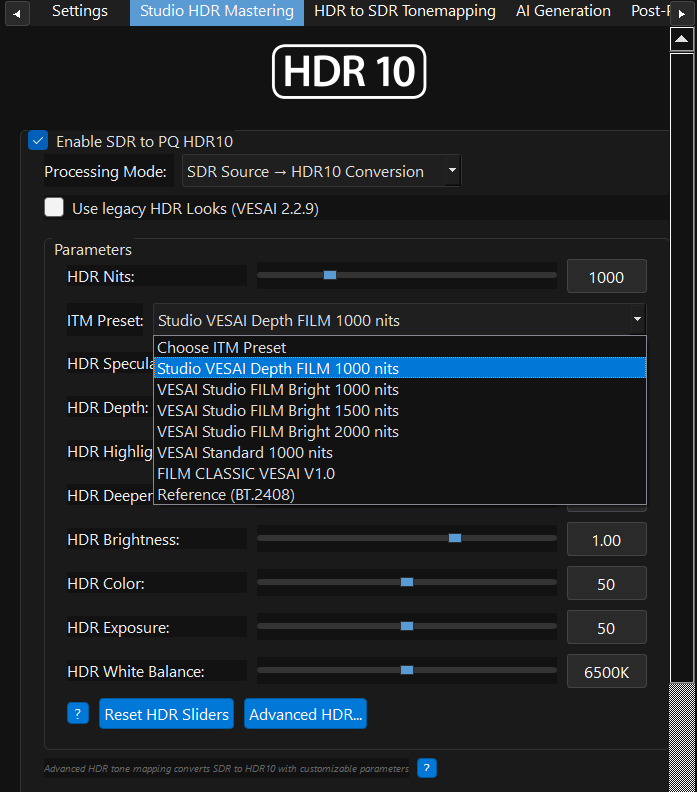
- Studio VESAI Depth FILM 1000 nits is selected by default: real HDR depth without touching a slider
- Ready presets: Depth FILM, Studio Depth, FILM Depth, FILM Bright (1000 / 1500 / 2000 nits), Standard, Film Classic and Reference BT.2408
- New ISO presets with Specular isolation for 1000, 1500, 2000 and 4000-nit TVs: speculars shine, skies stay calm
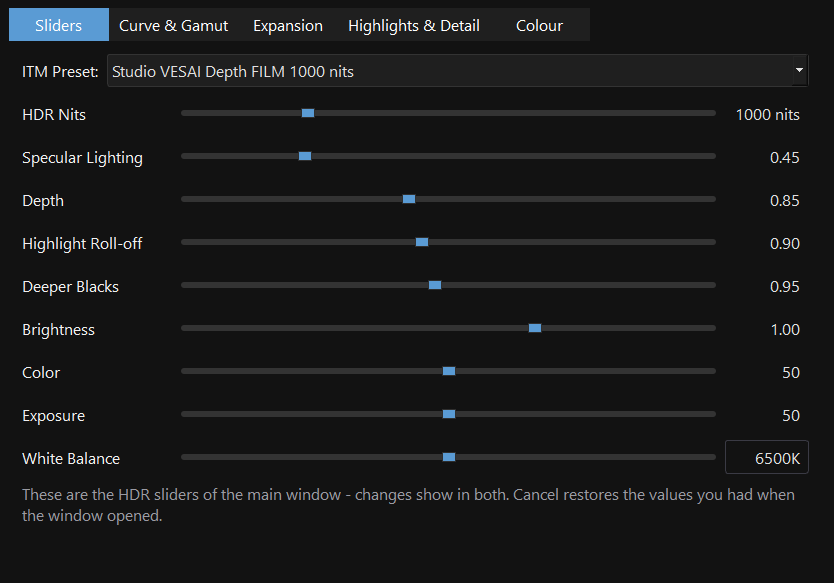
- Simple sliders that do what they say: peak brightness, highlights, depth, brightness, blacks, color
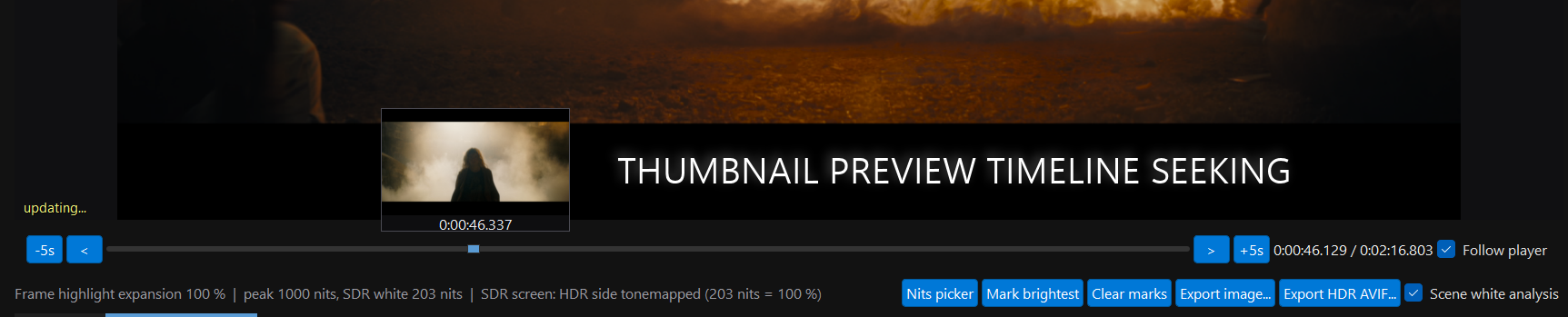
- Live before/after preview, in real HDR when Windows HDR is on
- Upscale your old DVDs and Blu-rays to 4K HDR and smooth them to 60 fps in the same pass
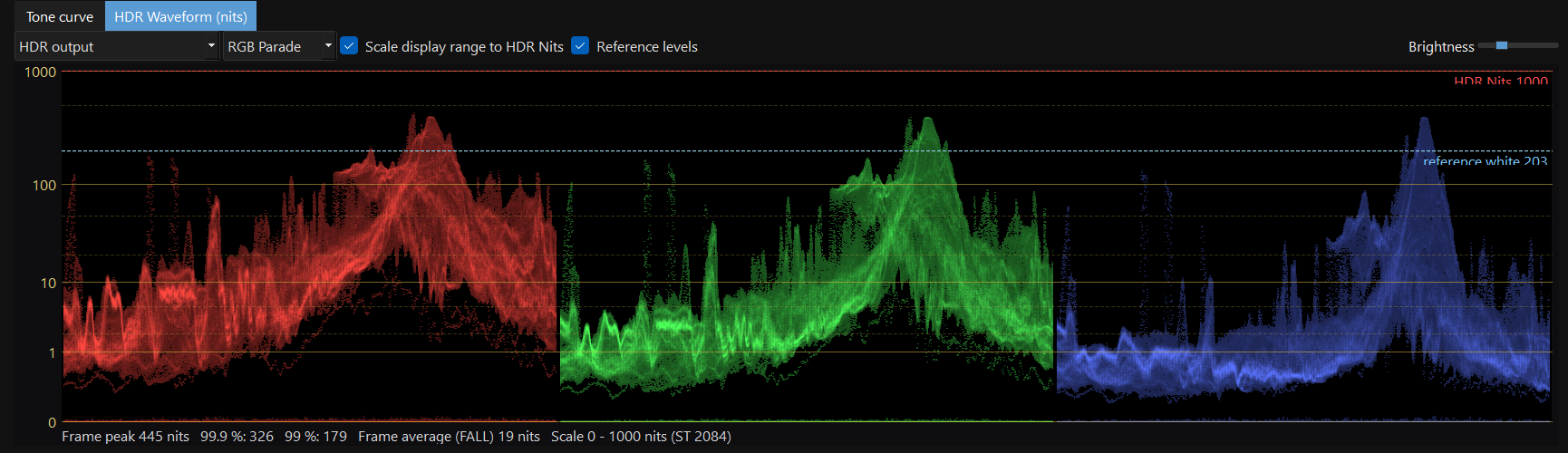
- HDR Waveform in nits on the ST 2084 scale, RGB parade, frame peak / 99.9 % / average
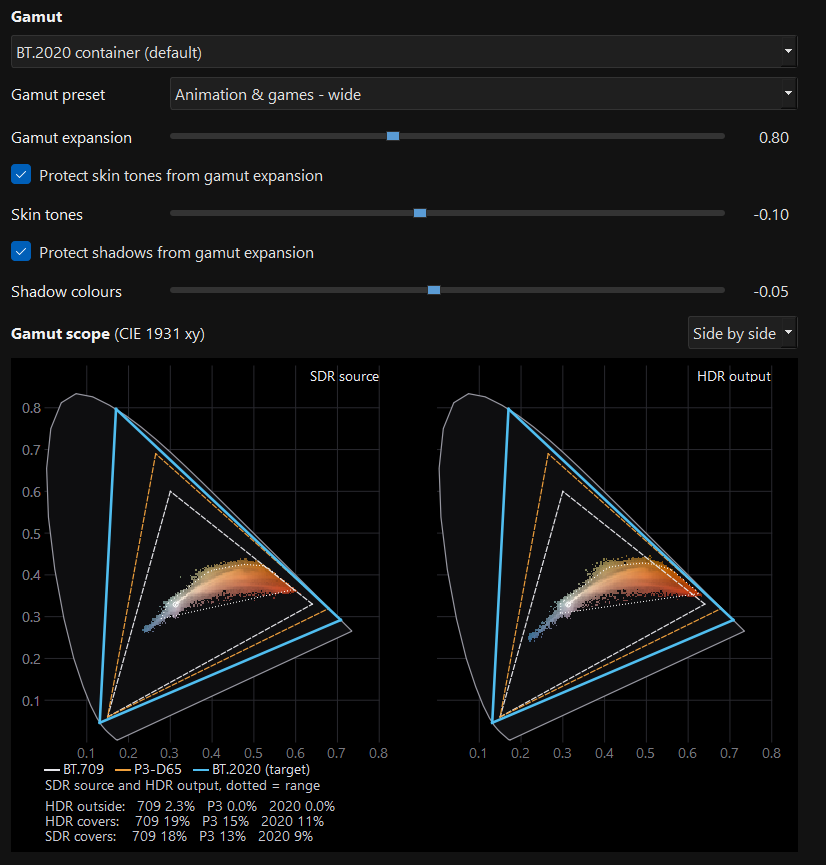
- CIE 1931 gamut scope against BT.709, P3-D65 and BT.2020, false colour and nit read-out
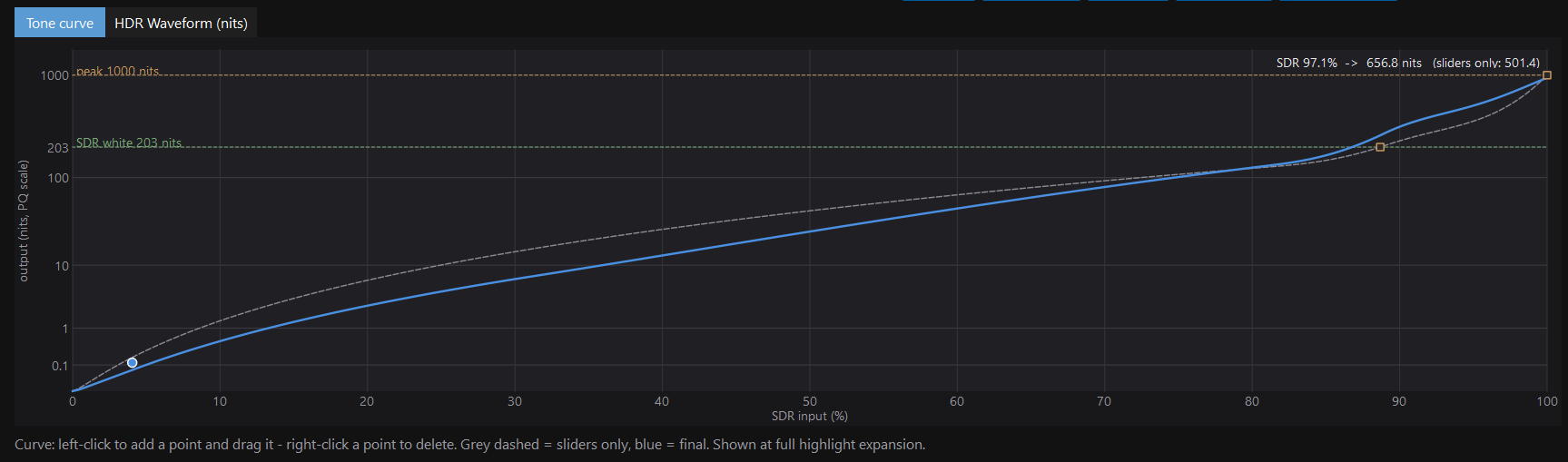
- Tone curve on real HDR axes, mid-grey target in nits, black point, highlight limiter
- Per-scene bright-area control with adjustable levels, logged scene by scene
- Source EOTF (BT.1886, Rec.709-A, sRGB, 2.6), full / limited range, P3-D65 limit, ProRes 4444 XQ HDR
- Profiles that save the whole grade for repeatable deliveries
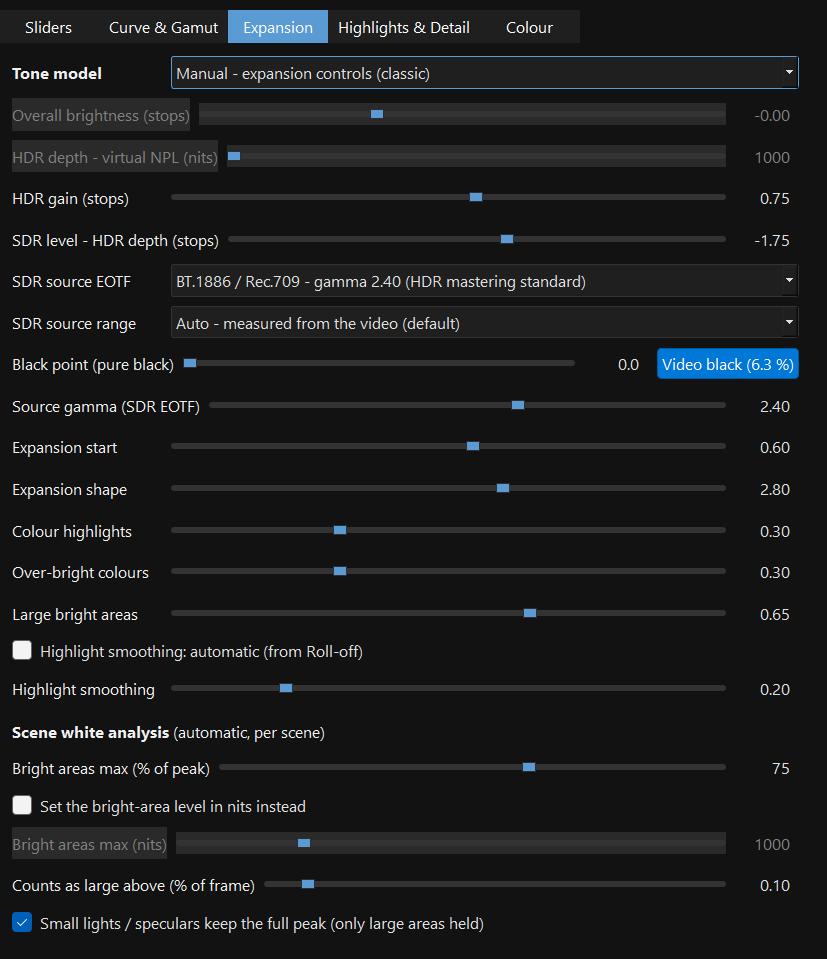
- HDR depth: SDR level pushes shadows and midtones down in PQ while the peak holds; HDR gain up to +3 stops
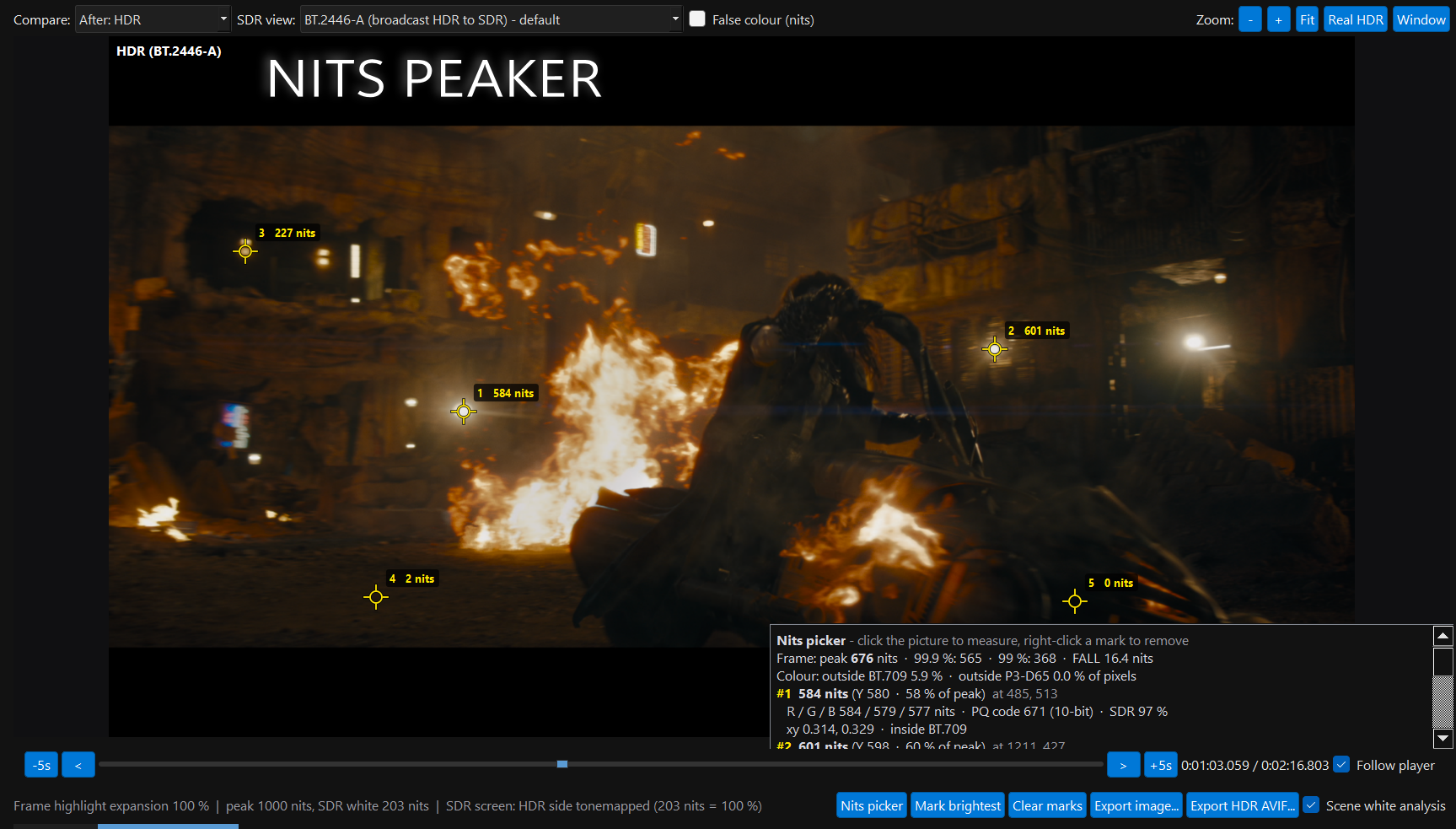
- Nits picker and Mark brightest: measure any spot in real nits, export the frame with an HDR info bar
- Highlight recovery, highlight softness, black zone and Oklab six-vector colour grading
- Specular isolation: automatic pixel-level speculars vs large-area separation, Highlight ceiling and Specular peak up to 10,000 nits
- Export HDR AVIF + SDR JPG of any frame for web before / after comparisons
See exactly what the encode will be
The preview is rendered by the same engine as the final encode. What you approve is what you deliver.
Every tool, on screen
Real screenshots from VESAI 2.3. Click any image to see it full size.
Live preview, rendered by the encode engine
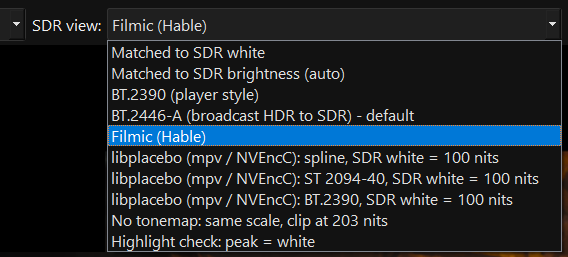
Real HDR inside the window with Windows HDR on, tonemapped on SDR screens. What you approve is what you deliver.
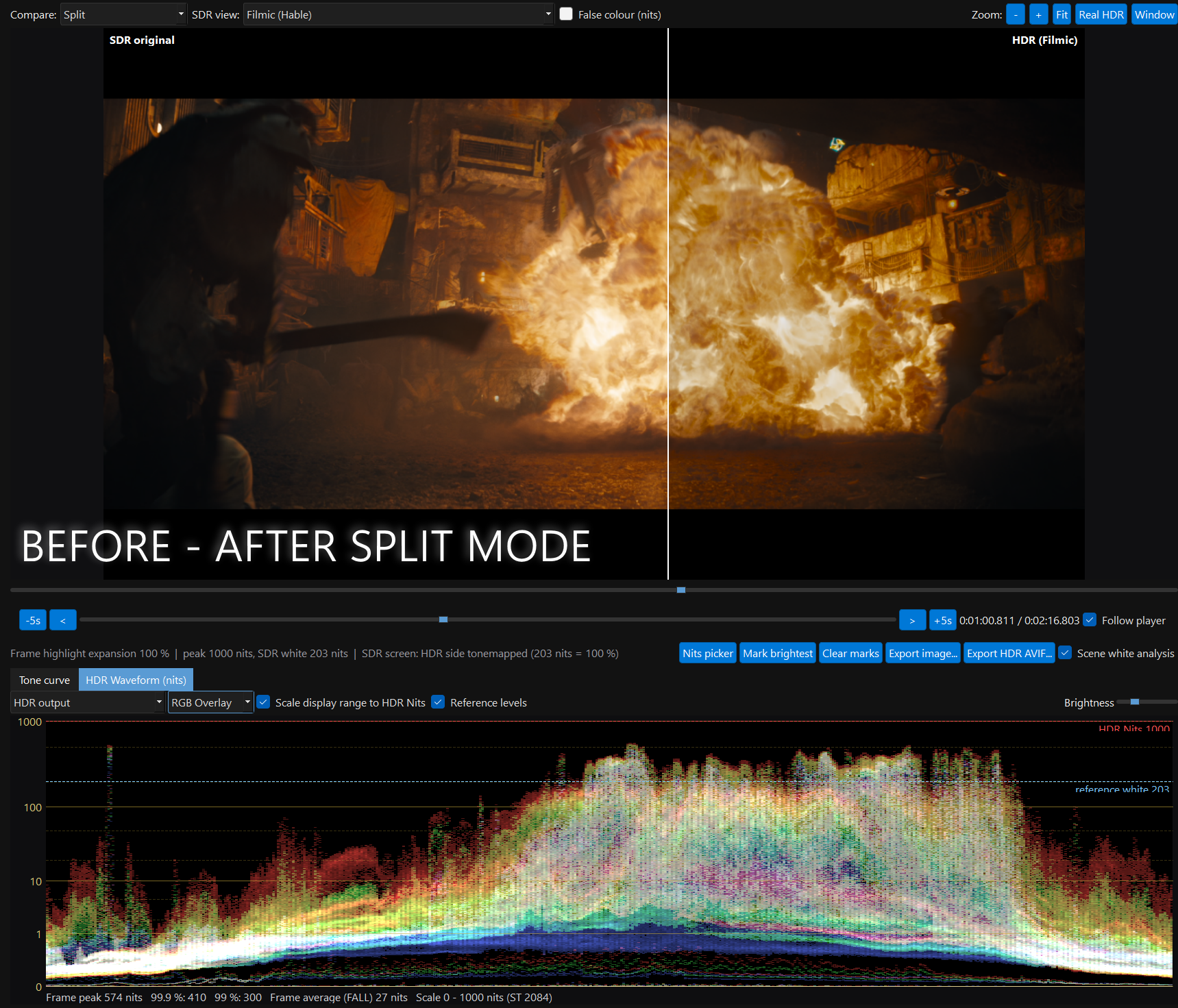
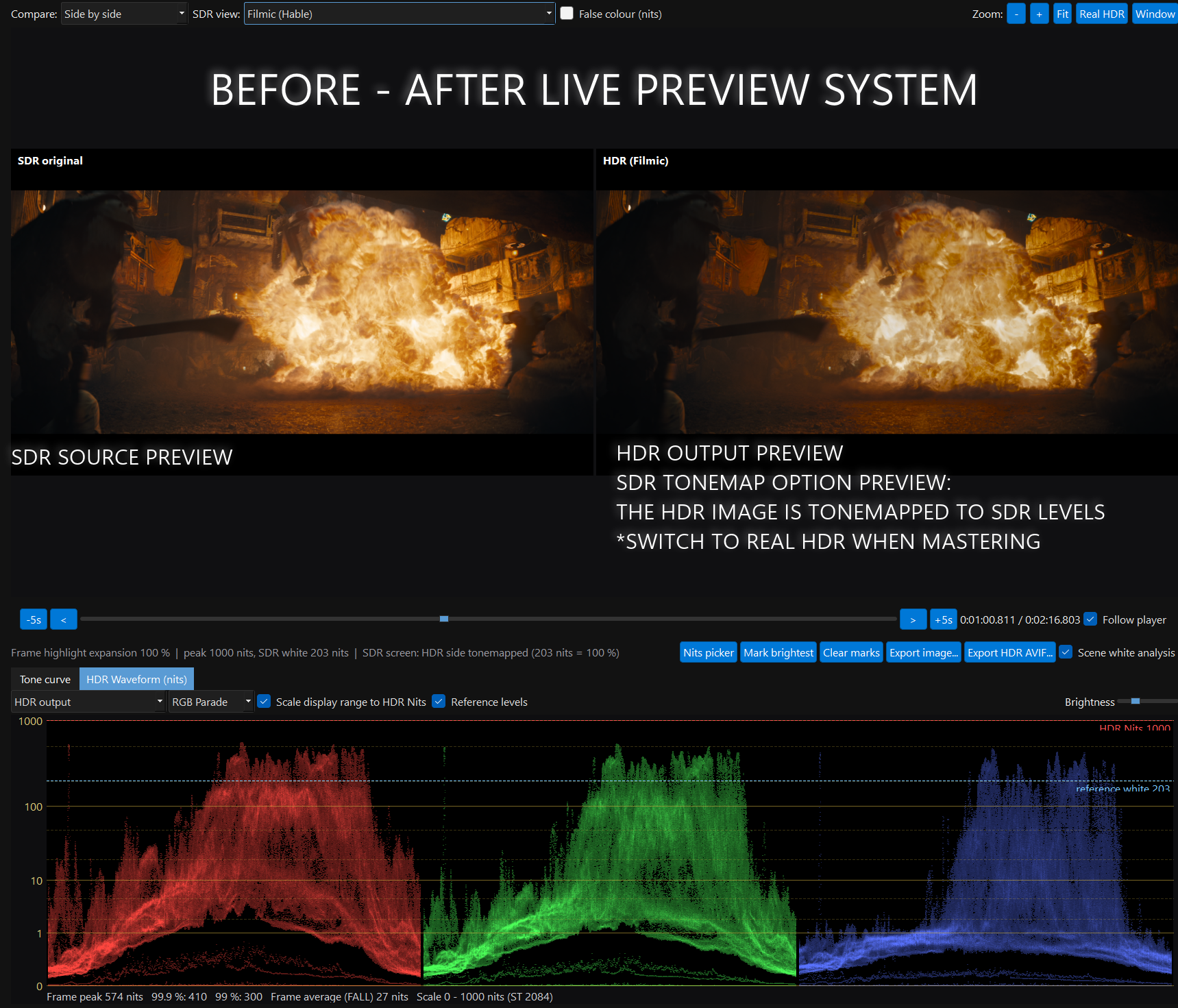
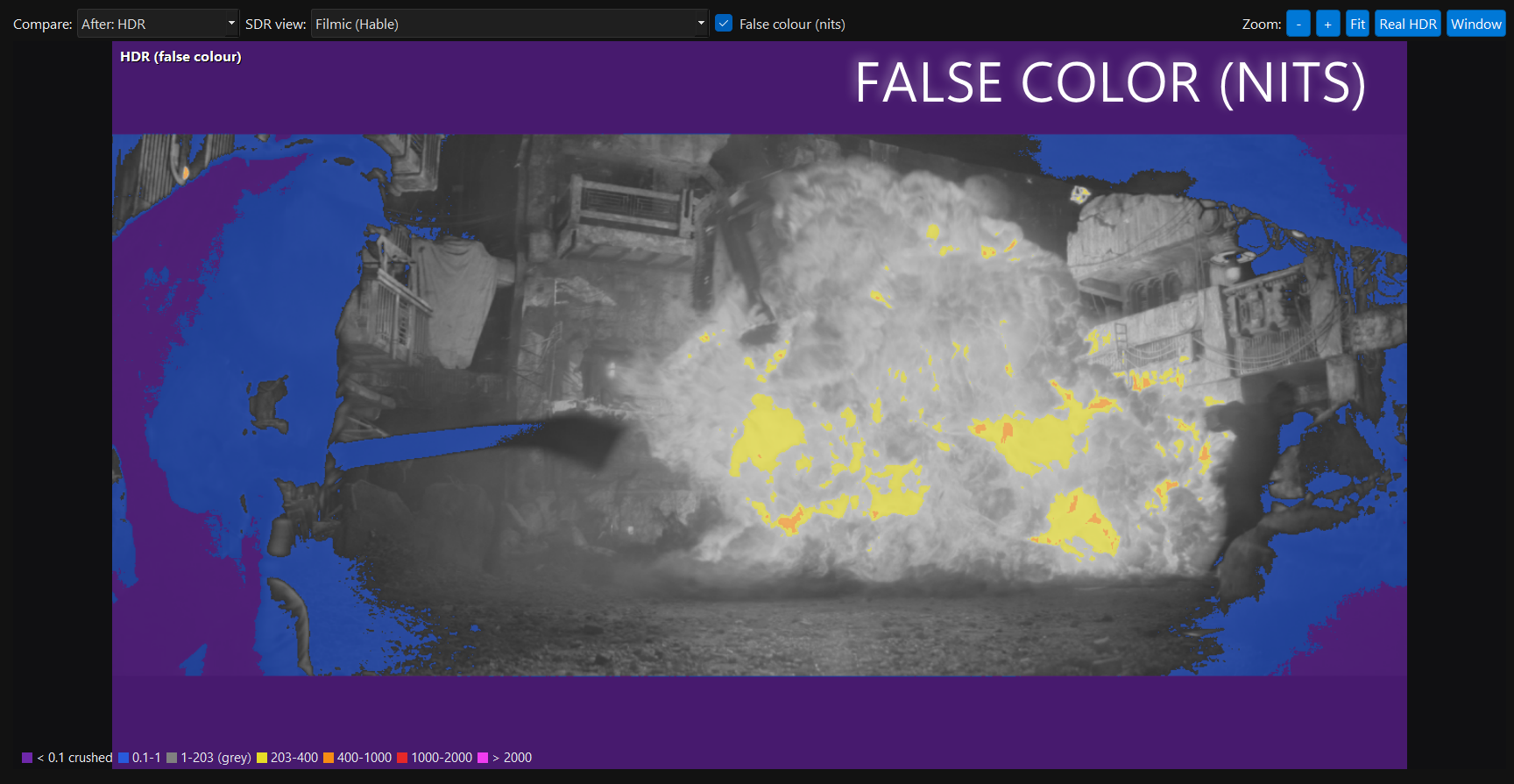
HDR scopes and the tone curve
Measure the master like a colourist: brightness in real nits on the ST 2084 scale, colour against BT.709, P3 and BT.2020.
Nits picker and HDR export
Click any spot to read its real HDR brightness, mark the brightest lights automatically, and export the frame with every measurement.
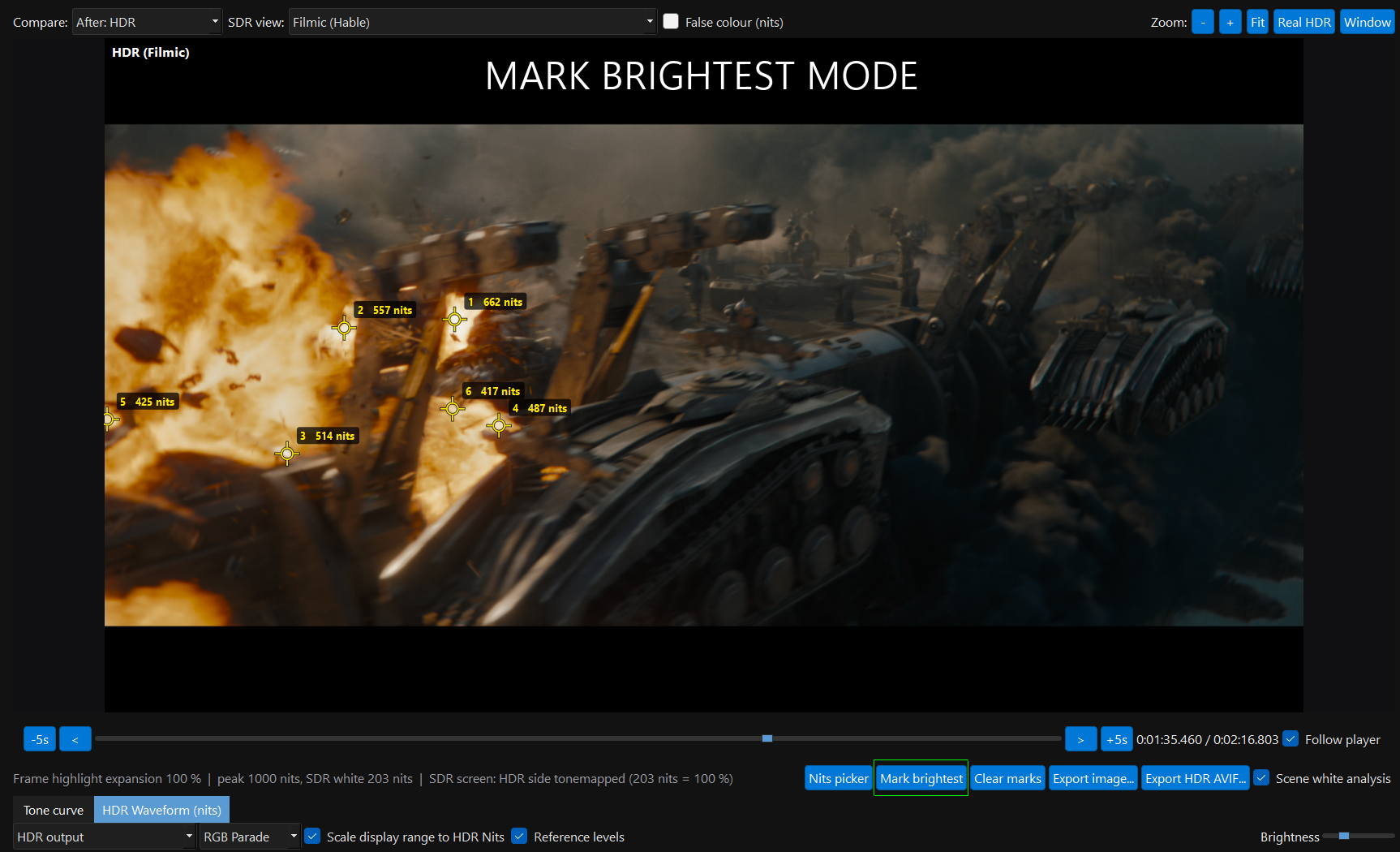
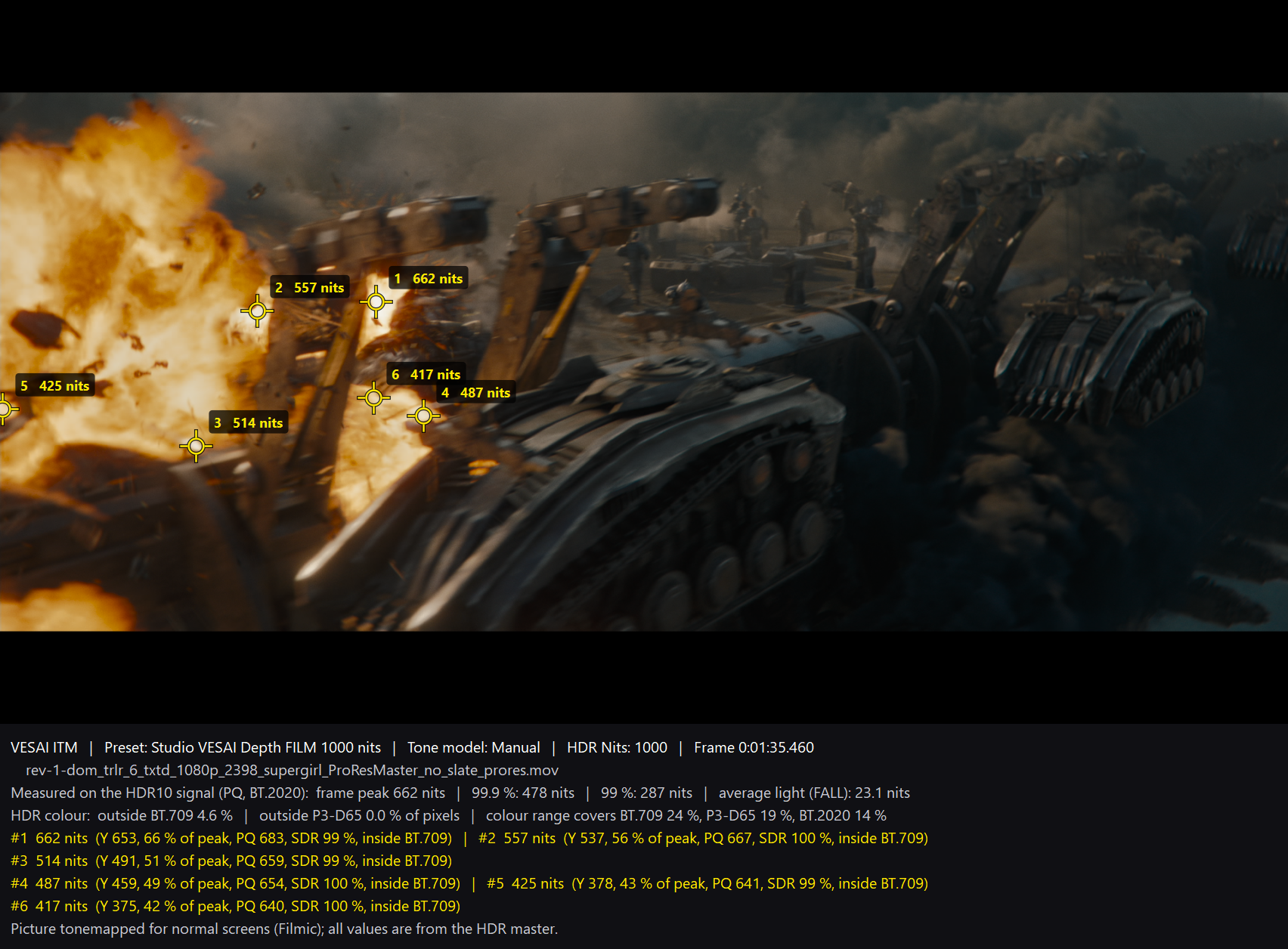
A full HDR grading window
Every part of the conversion is yours to shape: depth, highlights, blacks and colour.
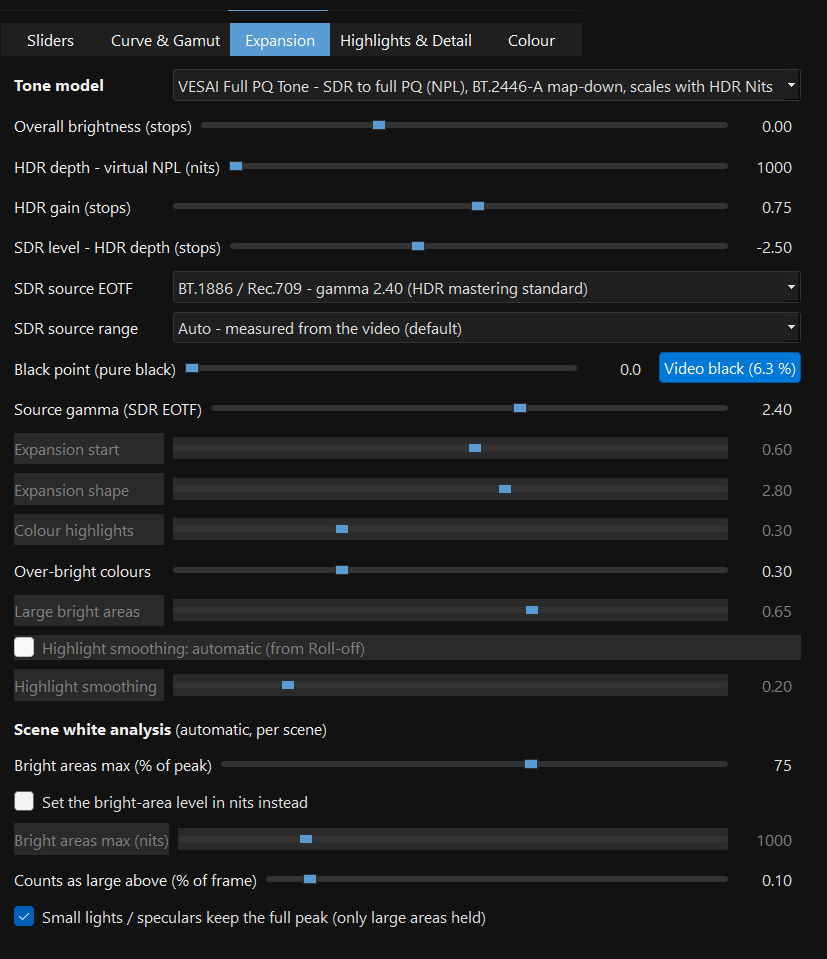
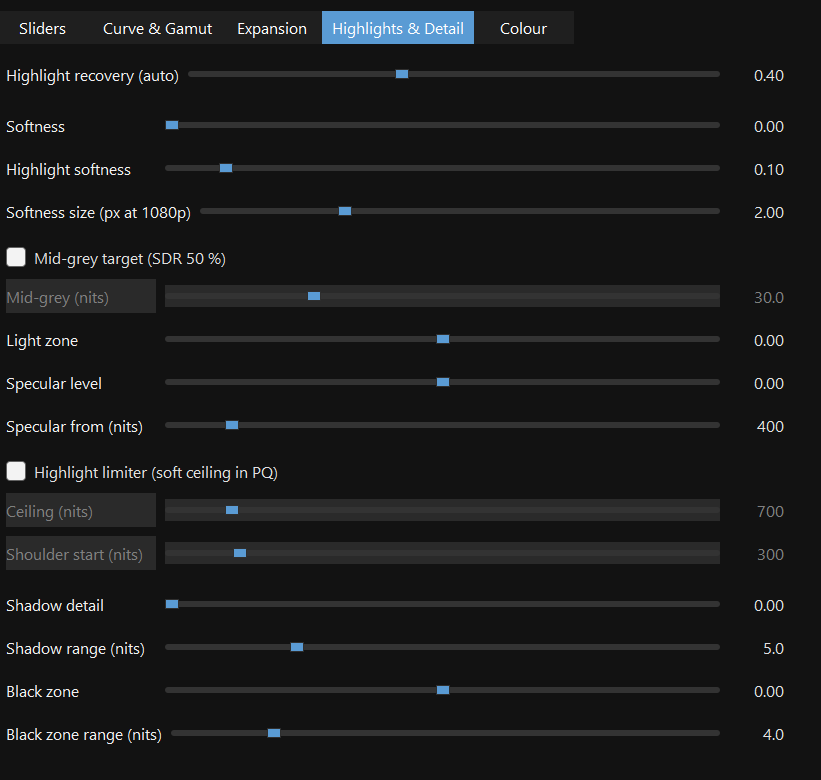
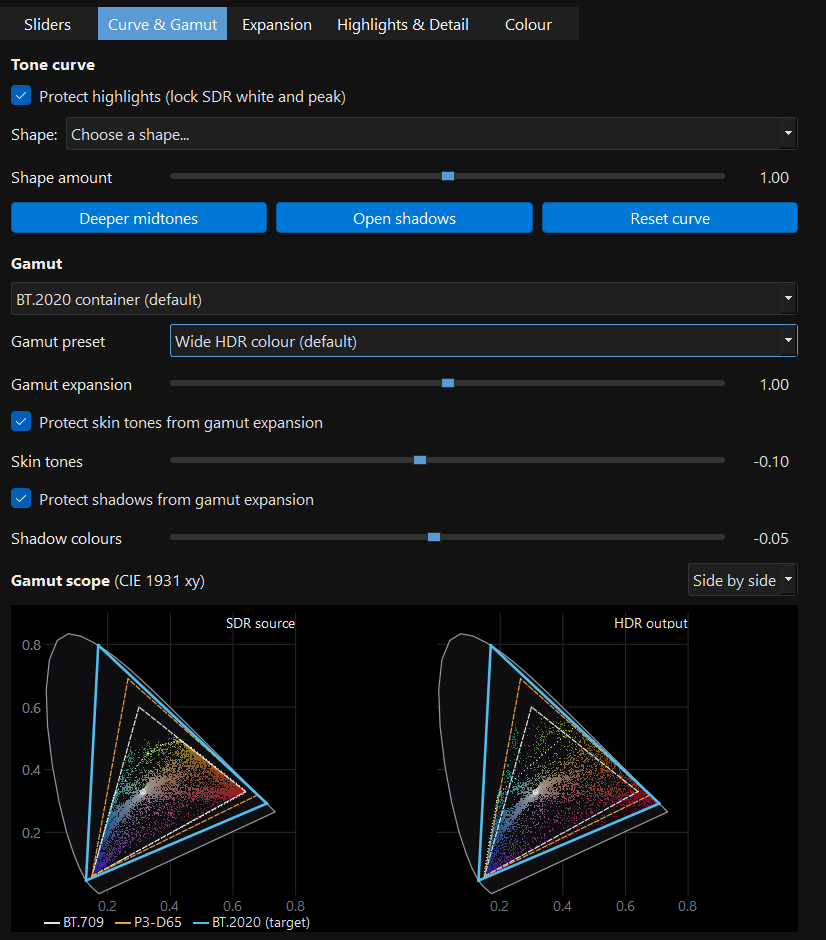
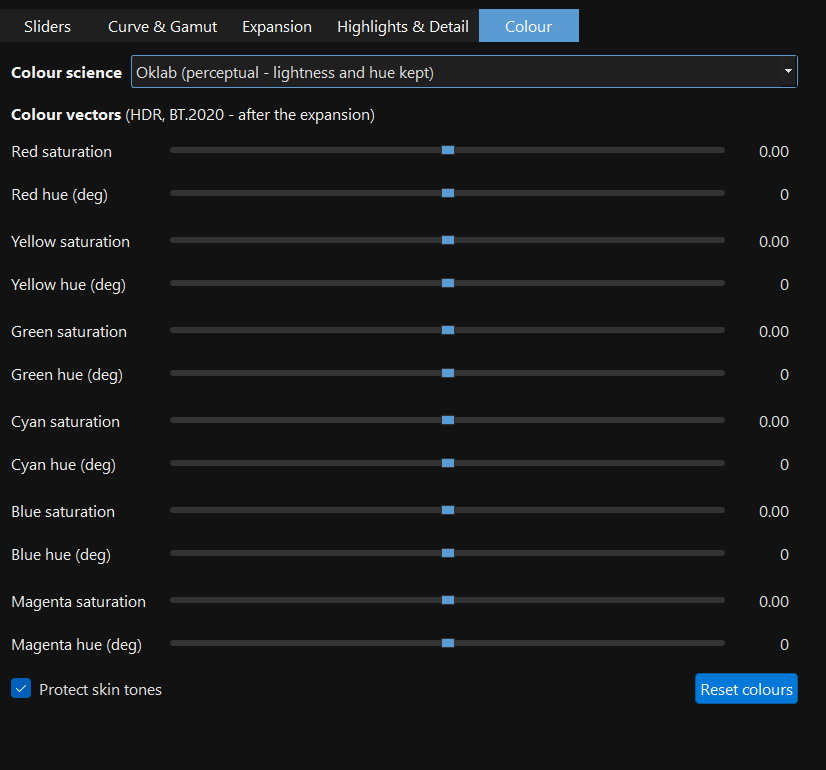
One click from the main window
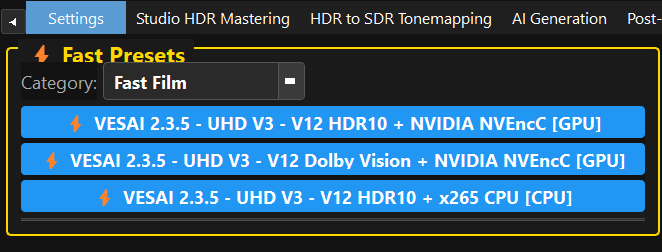
Pick an ITM preset or a Fast Preset and encode. The default gives real HDR depth without touching a slider.
HDR + Upscaling + Interpolation, together
Pristine 10-bit AVIF masters
 HDR10
HDR10
HDR10
HDR10
HDR10
HDR10
HDR10
HDR10
HDR10
HDR10
 HDR10
HDR10
HDR10
HDR10
Fake HDR is everywhere. Real HDR is only here.
Most "SDR to HDR" tools boost brightness, crank contrast, and repackage SDR inside an HDR container. The dynamic range never changes.
- Amplifies SDR brightness and calls it HDR
- Colors stay trapped in BT.709 gamut
- No real expansion of dynamic range
- One filter on every frame — no scene analysis
- Metadata copied from a slider, so TVs clip the highlights
- No real-time preview: render first, pray later
- Analyses the whole video and masters every scene on its own
- Studio tone: natural skin and midtones, real specular highlights
- Large bright areas held back automatically, glints keep the peak
- Hue-preserving colour in a BT.2020 container, safe gamut expansion
- MaxCLL / MaxFALL measured from the result + Dolby Vision workflow
- Preview rendered by the encode engine, with HDR scopes
We compared the main SDR-to-HDR tools. None does all of this.
AI converters don't analyse the video: they convert each frame as it comes. Grading suites need a colourist. VESAI analyses the whole film and masters it, with the controls a professional expects.
| Feature | VESAI 2.3.6 | Topaz Video AI Hyperion | UniFab HDR Upconverter | NVIDIA RTX Video HDR | DaVinci Resolve |
|---|---|---|---|---|---|
| Whole-video scene analysis before converting | ✓ Every shot | ✗ No analysis | ✗ No analysis | ✗ No analysis | Manual, shot by shot |
| Automatic specular isolation (pixel level) | ✓ Automatic | Not documented | Not documented | Not documented | Manual (qualifier + mask) |
| Choose the mastering peak (1000–4000 nits) | ✓ | Not documented | Not documented | ✗ | ✓ |
| MaxCLL / MaxFALL measured from the result | ✓ | Not documented | Not documented | ✗ No file | Manual |
| Grading controls (curve, depth, highlights, six colour vectors, gamut) | ✓ Full set | Exposure, saturation, highlight threshold | Colour space, format | Basic | ✓ Full (manual) |
| Perceptual colour science (Oklab) | ✓ | Not documented | Not documented | Not documented | Via colour-managed workflow |
| Live HDR preview rendered by the encode engine | ✓ | Render a preview first | Not documented | Playback only | ✓ |
| HDR scopes in nits (waveform, gamut, nits picker) | ✓ | ✗ | Not documented | ✗ | ✓ |
| Exports a real HDR10 file | ✓ + Dolby Vision workflow | ✓ | ✓ HDR10 / Dolby Vision | ✗ Playback only | ✓ |
| Works without a colourist | ✓ Presets or full control | ✓ | ✓ | ✓ | ✗ |
Based on each product's public documentation, October 2026. "Not documented" means we could not find the feature in that product's documentation. Topaz Video AI, UniFab, NVIDIA RTX Video HDR and DaVinci Resolve are trademarks of their respective owners; VESAI is not affiliated with them. Send us a correction and we'll update this table.
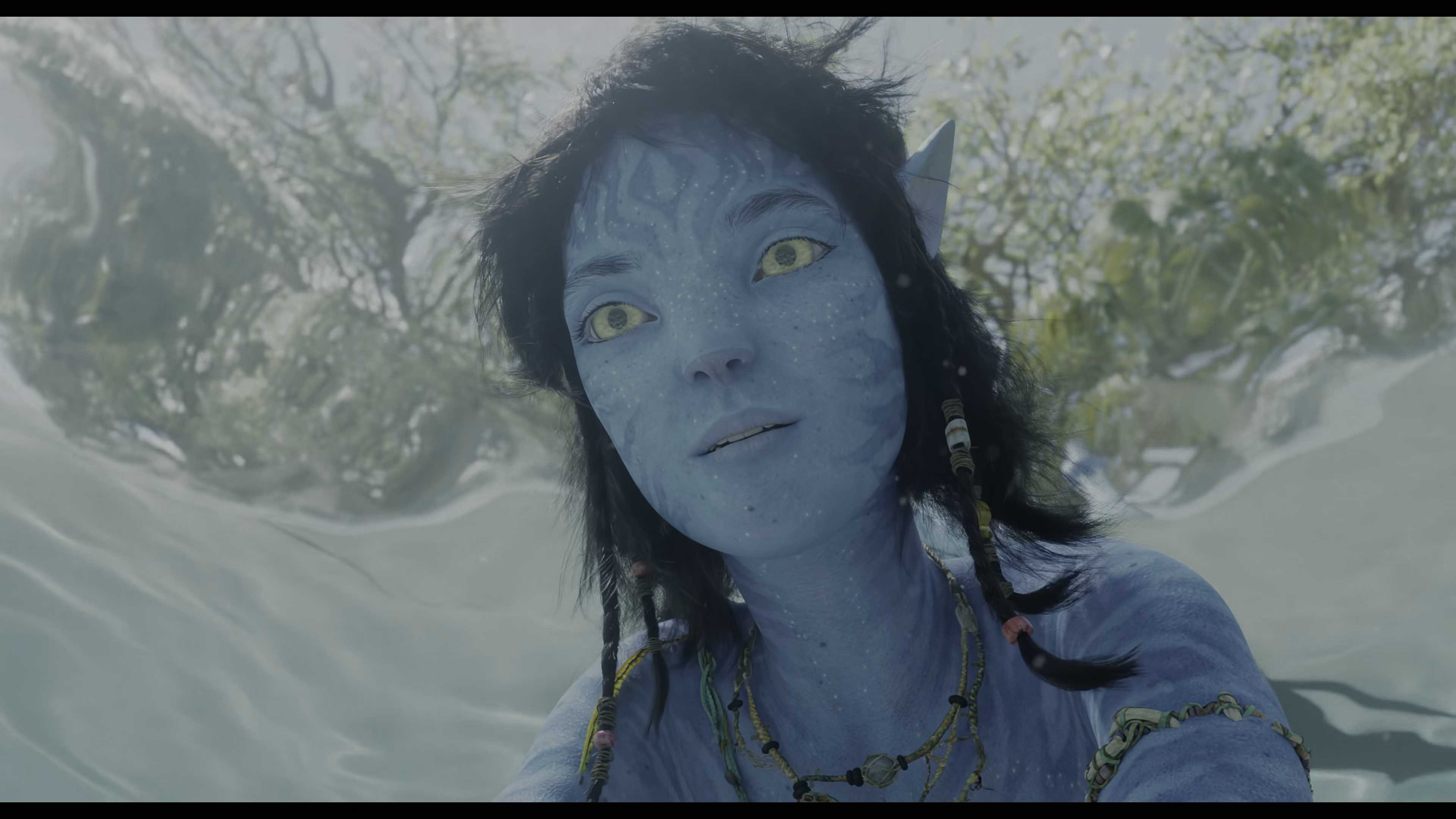
Already HDR? VESAI still improves it.
This one is subtler and it is not the main point — it is the same studio HDR master, re-graded by VESAI. Highlight roll-off, shadow separation and gamut coverage all improve without touching the original intent.
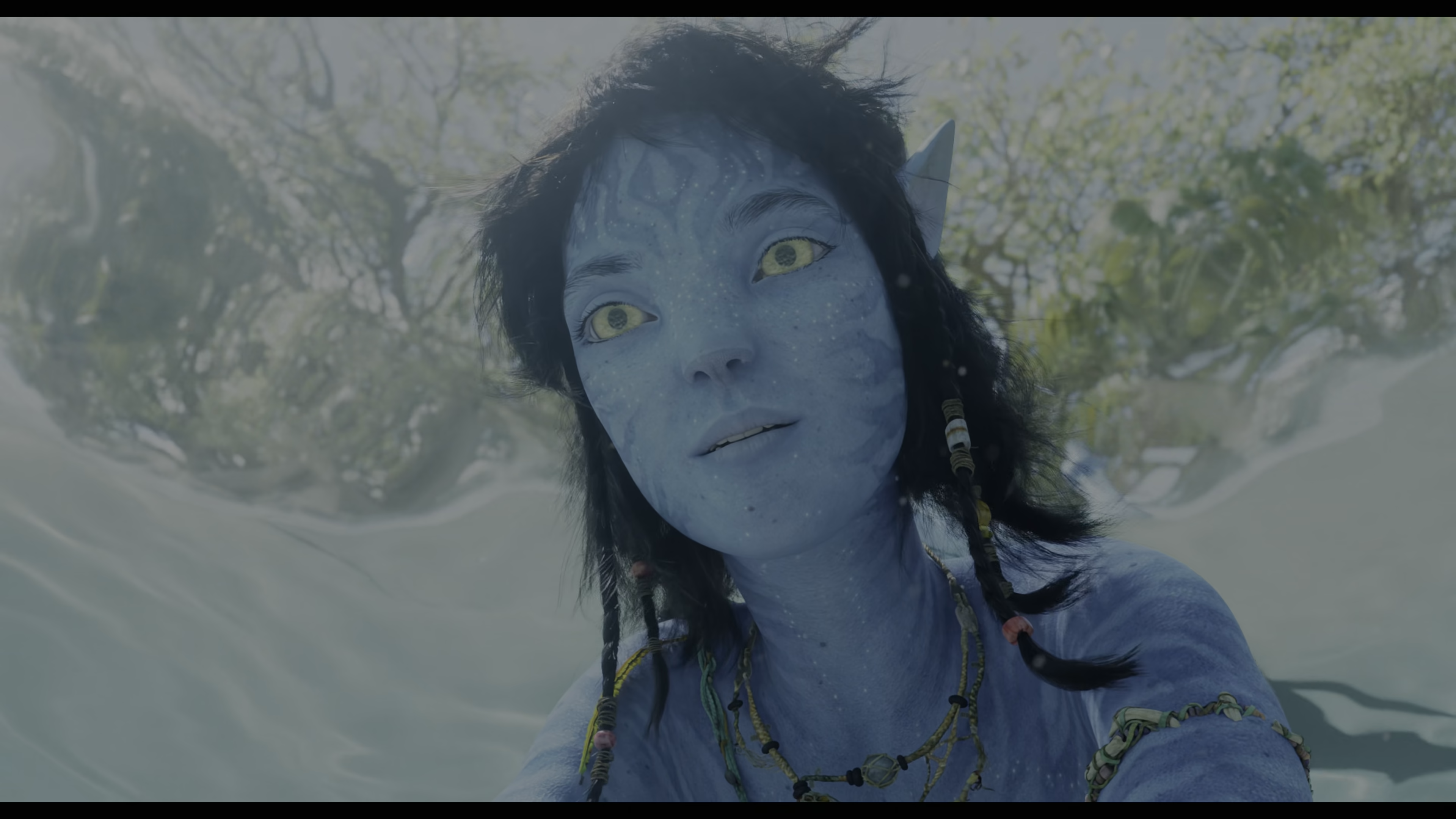
 ORIGINAL HDR
VESAI ENHANCED
ORIGINAL HDR
VESAI ENHANCED
Pick your tier. Start today.
Every license includes cloud AI model updates. Desktop processes locally on your GPU. No GPU? VESAI Cloud runs in any browser.
- 1 machine
- Full HDR10 Mastering
- AI Upscaling & Interpolation
- Full AI model set
- 1 machine
- Full HDR10 Mastering
- AI Upscaling & Interpolation
- AI Generation Suite
- Up to 5 machines
- Everything in Creator
- AI Generation Suite (local)
- Attribution optional
Master real HDR today
Try VESAI 2.3 free for 1 day: full Creator features, the new HDR core, no watermarks. Card required — cancel before it ends and you're not charged. Desktop software or cloud service — your choice.
Photorealistic AI characters, perfectly consistent across scenes, animated with realistic motion. Persona Vision · Consistent Character Studio · Realism Motion Engine — all in your browser.